Project overview
The Enriching Elmbridge Meadows project has transformed 750 metres of the Hogsmill river in Kingston into a healthier, more natural space where wildlife can thrive and people can connect with nature.
Set within Elmbridge Meadows Local Nature Reserve, this much-loved green space is used daily by walkers, families, volunteers and local residents. This project has restored natural river processes, improved habitats, and created new opportunities for people to experience and care for their local river.
Alongside physical restoration, the project has brought the community closer to the Hogsmill through guided walks, volunteering, education sessions and community events.
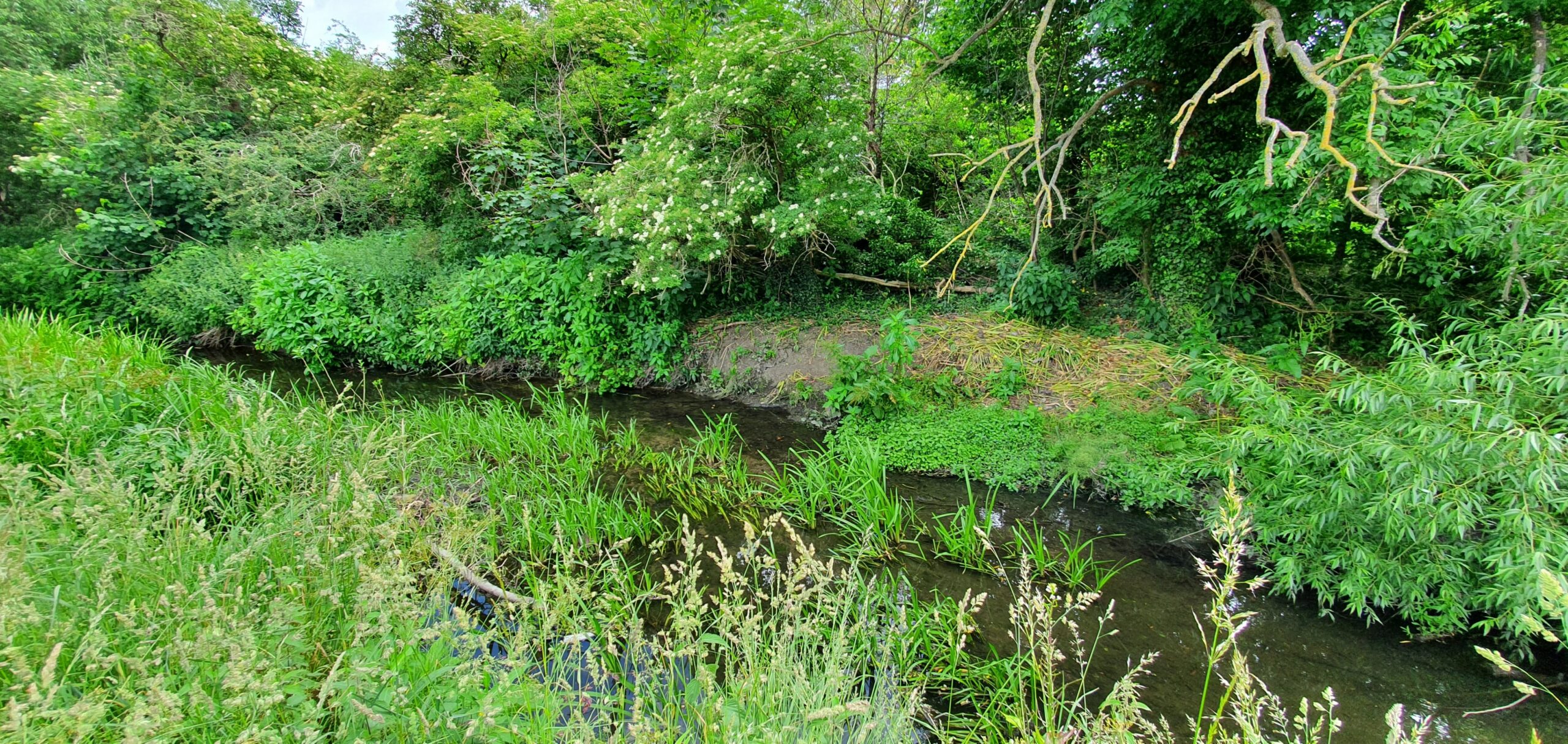
The Hogsmill river at Elmbridge Meadows in Surrey © South East Rivers Trust
Why this project was needed
The Hogsmill is a rare chalk stream, but like many urban rivers, it has been heavily modified.
Through Elmbridge Meadows, the river had become:
- Straightened and over-wide, with little variation in flow
- Deeply incised, with steep banks limiting access and habitat
- Lacking in natural features such as gravel and woody material
- Overshaded, restricting plant growth and biodiversity
These changes reduced habitat quality, limited wildlife, and disconnected people from the river.
Across the wider catchment, the Hogsmill also faces pressures from pollution, low flows, sewage inputs and invasive non-native species—making restoration in this stretch an important step towards a healthier river system.
What we did
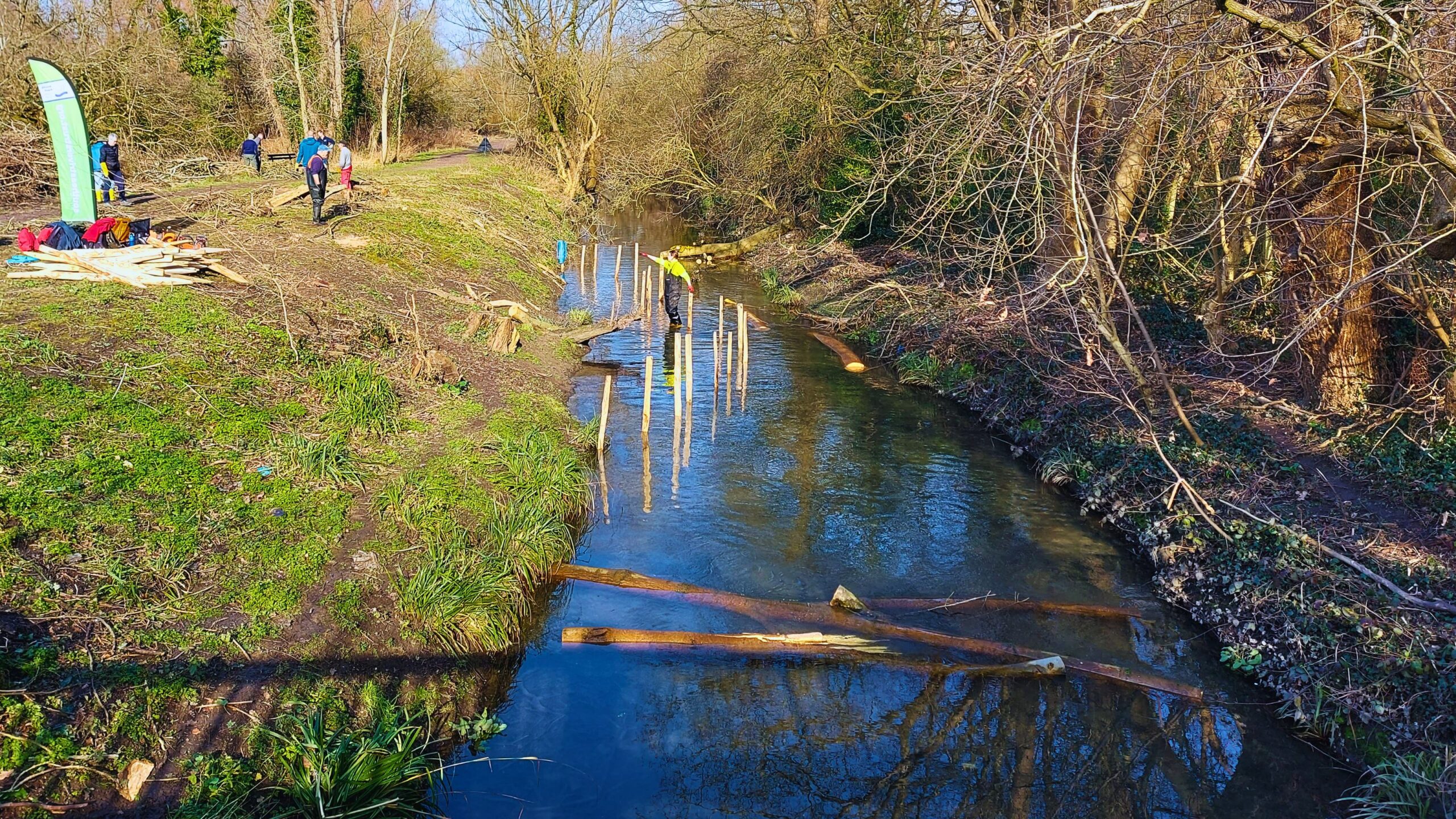
We worked with partners and the local community to restore natural river processes and create a more resilient, diverse habitat.
Key improvements included:
- Regrading riverbanks to create wider, shallower edges and improve marginal habitats
- Adding woody material (tree trunks, branches and root balls) to increase flow diversity and habitat complexity
- Narrowing the channel to speed up flow and help clean gravels naturally
- Adding over 250 tonnes of gravel to improve spawning habitat for fish
- Creating a backwater refuge to support wildlife during pollution and high flow events
- Planting native vegetation to boost biodiversity in and around the river
- Installing dead hedging to reduce erosion and protect riverbanks
- Creating two dog dips to provide safe, managed access to the river
We also created habitat features such as log and wood piles, supporting insects, amphibians and small mammals.
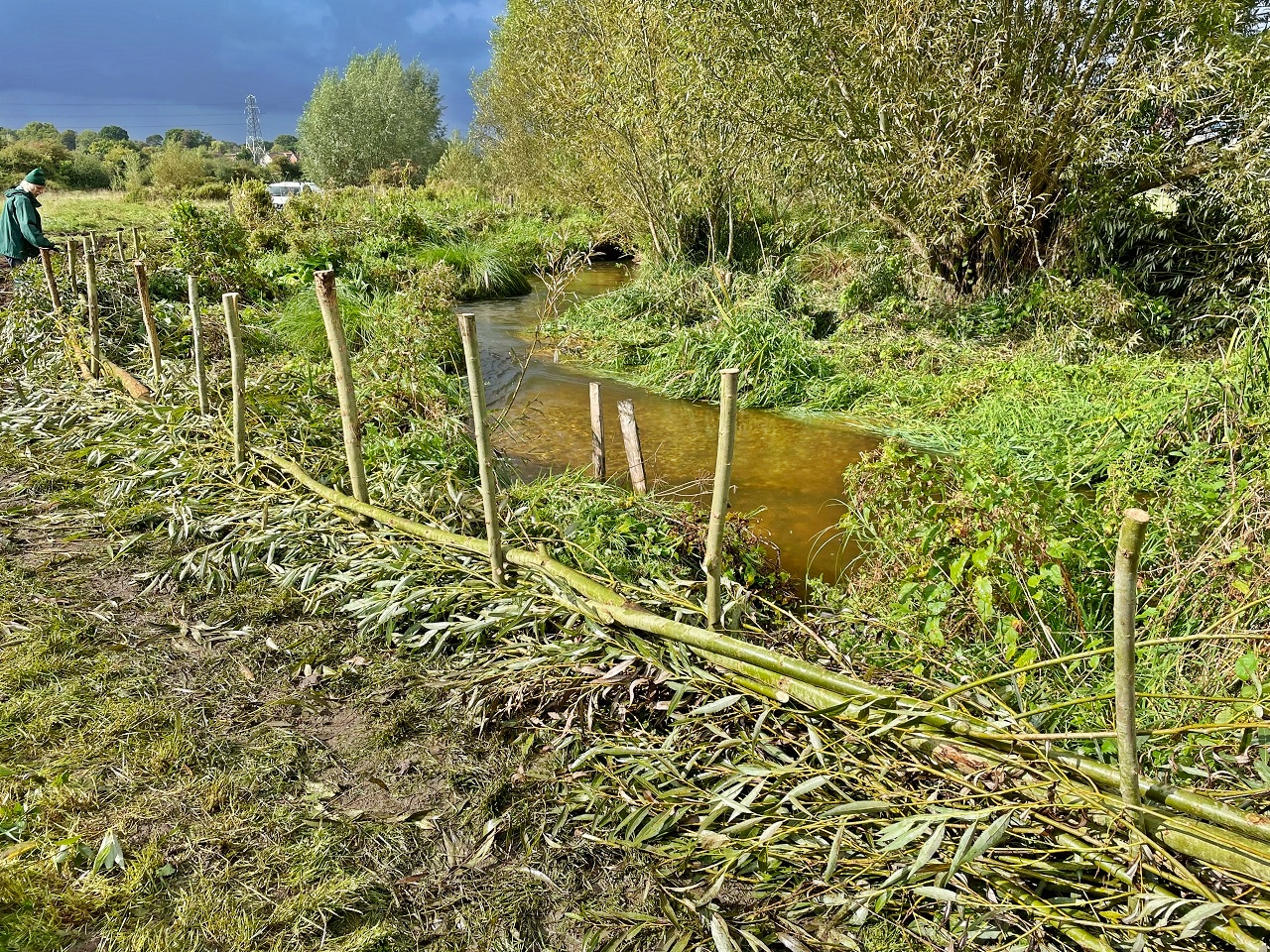
Dead hedging to protect the riverbanks © South East Rivers Trust
Community and engagement
People have been at the heart of this project.
Over 150 volunteers joined us alongside partners including Citizen Zoo and the Lower Mole Partnership to help shape and protect the site.
We also delivered:
- Guided walks and community events
- Practical volunteering opportunities
- Outdoor education sessions for schools and local groups
These activities have helped build a stronger connection between people and their river—supporting long-term care and stewardship.
Funding and partners
This project was made possible thanks to funding and collaboration from:
- Thames Water (through a Voluntary Reparation following a pollution incident)
- Natural England – Species Recovery Programme
- EMPOWER Rivers
- Royal Borough of Kingston upon Thames – Neighbourhood Community Infrastructure Levy
What’s next
Elmbridge Meadows will continue to evolve as plants establish and natural processes shape the river.
Next steps include:
- Ongoing monitoring to track ecological improvements
- Continued community engagement and events
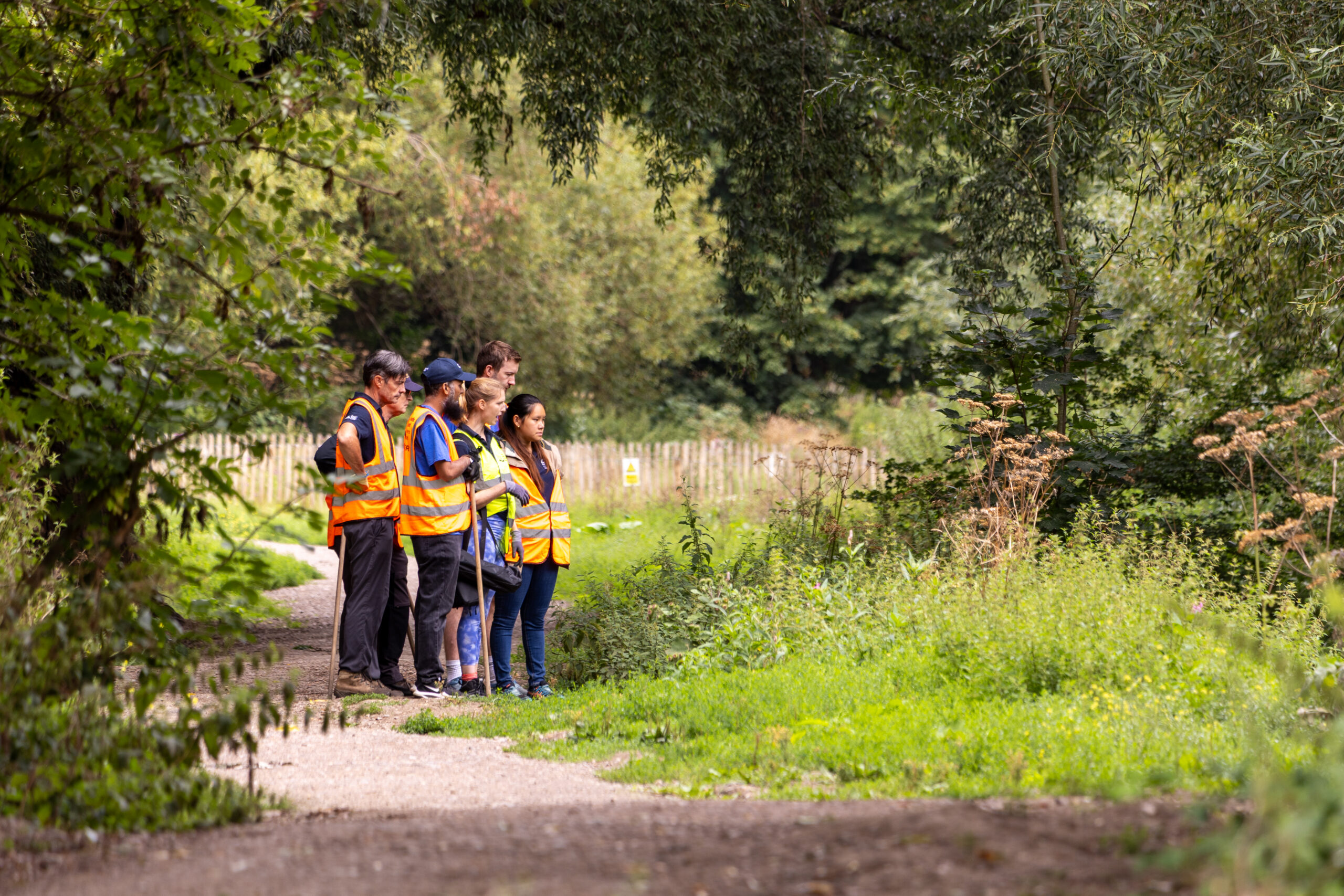
A practical volunteering event © South East Rivers Trust
Help rivers and wildlife thrive
Support projects like Enriching Elmbridge Meadows that improve water quality, create habitats for wildlife and restore healthier rivers for local communities.