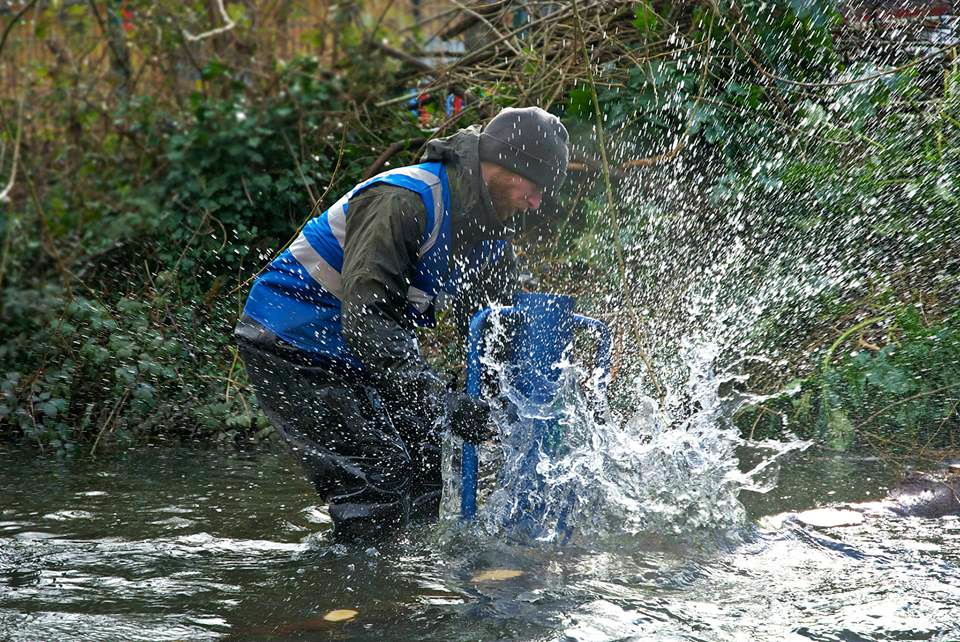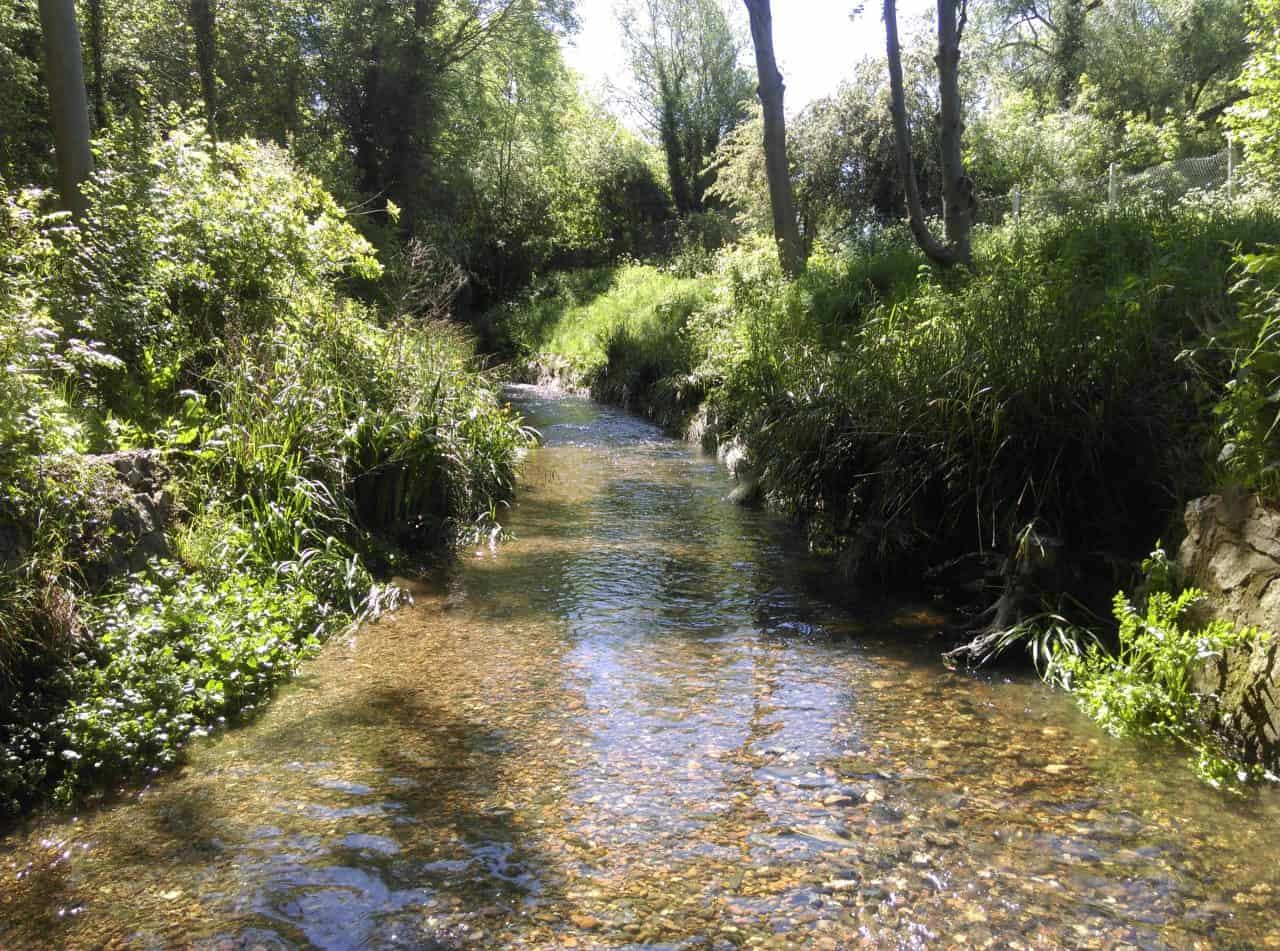
Restoring fish passage along the Hogsmill river
The Hogsmill river is a rare chalk stream flowing through South West London and Surrey, providing an important habitat for wildlife and a valued natural space for local communities.
For many years, fish moving through the river faced major challenges. Historic weirs, bridge structures and concrete barriers fragmented the river, preventing fish from reaching the habitats they need to feed, shelter and reproduce.
Since 2012, the South East Rivers Trust has been working to reconnect the Hogsmill river for fish and wildlife.
Originally, fish had to navigate 19 barriers along just 11 km of river, averaging one obstacle every 650 metres. Today, 18 of these barriers have been improved or removed, and work continues to restore full connectivity from Kingston to Ewell.
By opening up the river, we are helping create a healthier, more resilient ecosystem where wildlife can move more freely and rivers can function more naturally.
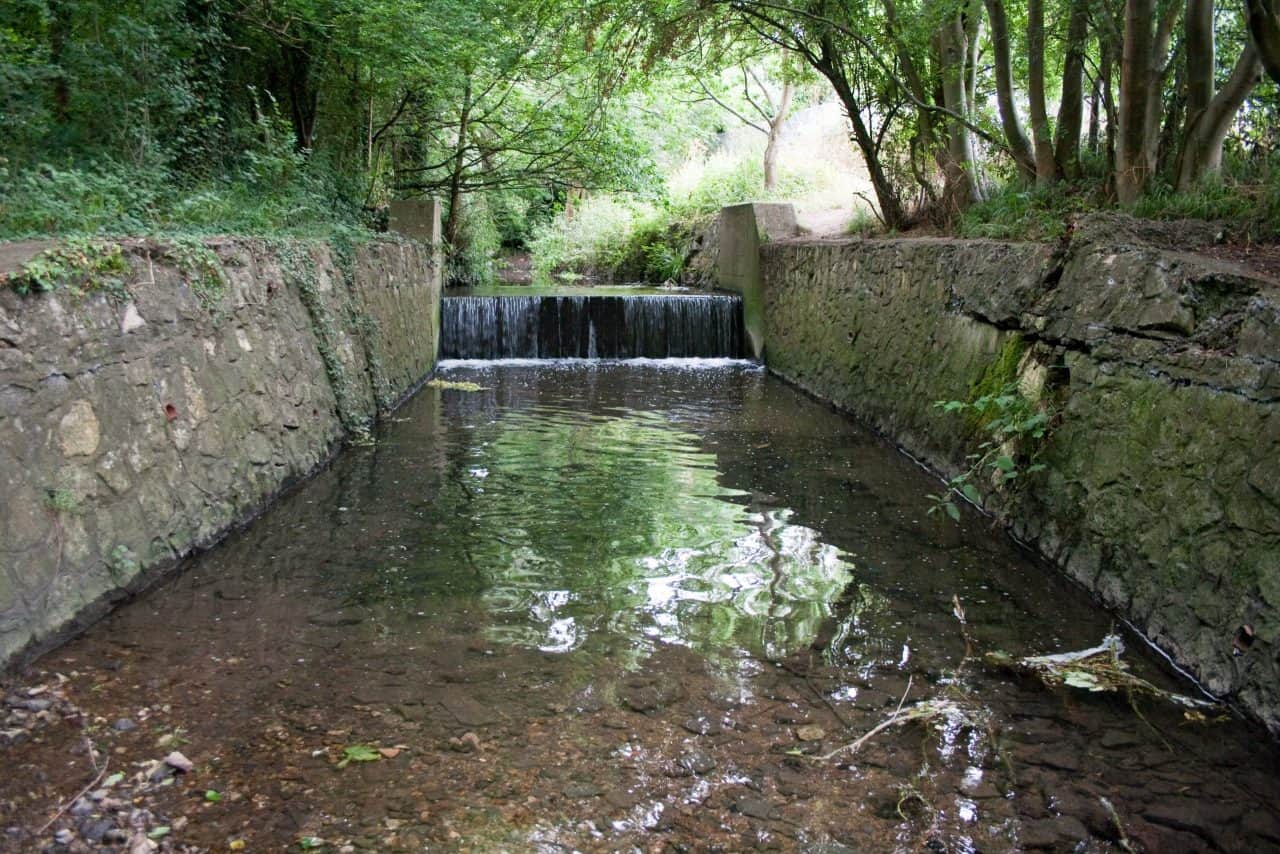
One of several weirs once found on the Hogsmill © South East Rivers Trust
Why fish passage matters
When people think about migrating fish, species such as salmon and trout often come to mind. However, most fish move throughout rivers during their lives to find suitable habitat.
Species such as chub, dace, roach and barbel rely on connected rivers to:
- reach spawning gravels
- access shelter during different seasons
- escape pollution or poor water quality
- recolonise stretches of river after environmental incidents
Fragmented rivers restrict these natural movements, reducing biodiversity and making fish populations less resilient.
Improving connectivity helps restore healthier fish populations and strengthens the wider river ecosystem.
Removing barriers and restoring natural rivers
Where possible, removing barriers completely delivers the greatest benefits for rivers.
Weir removal not only allows fish to move freely again, it also restores more natural river processes, including the movement of sediment and gravels downstream.
Since 2012, the South East Rivers Trust has removed five weirs along the Hogsmill, helping to naturalise previously modified stretches of river and improve habitat for wildlife.
These restored sections now flow more naturally, supporting healthier river habitats for fish and aquatic species.
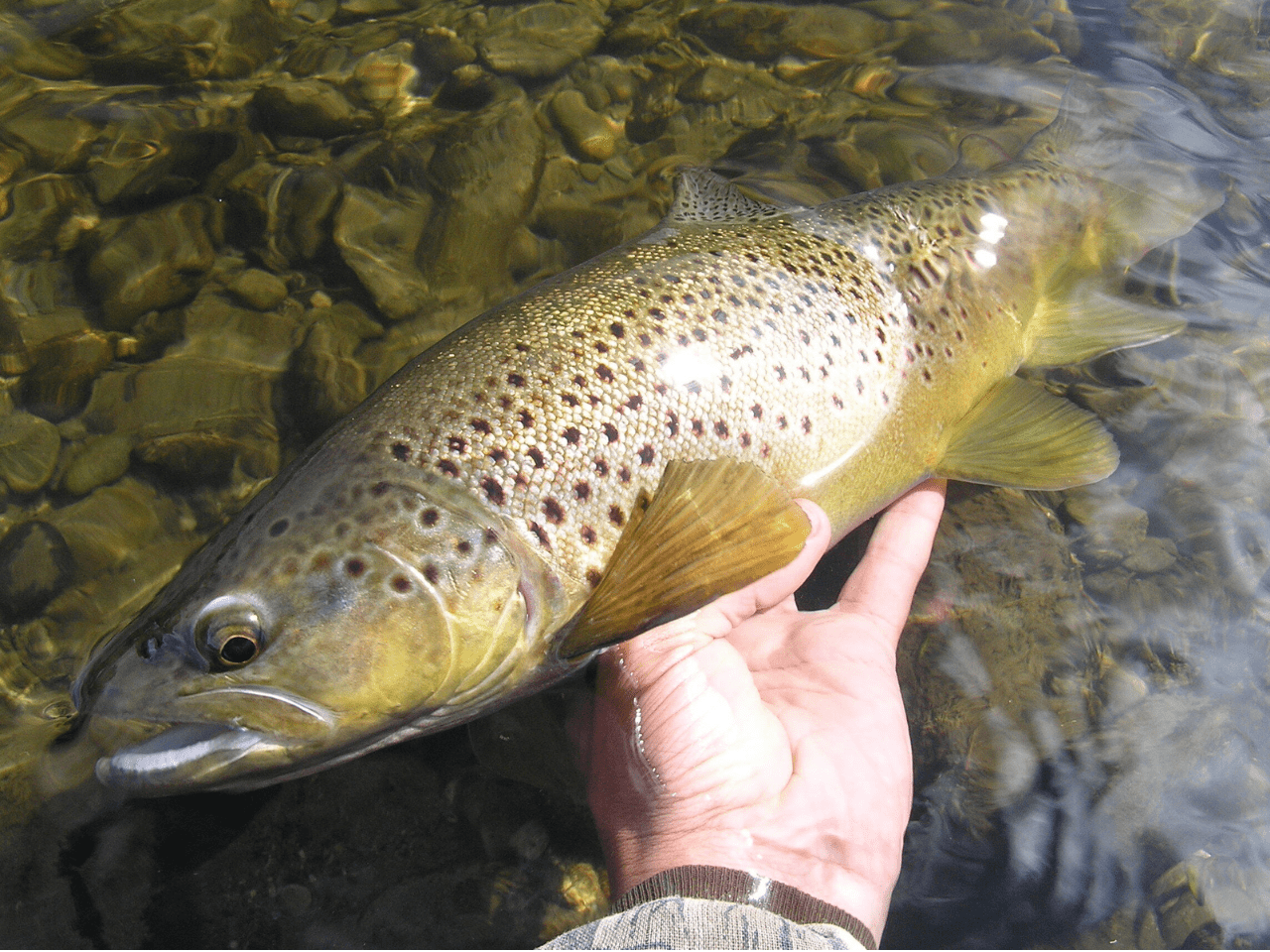
A brown trout © South East Rivers Trust
Finding solutions when barriers cannot be removed
Some structures along the Hogsmill, including the bridge footings of the A3 and A240, could not be removed due to their importance as transport infrastructure.
Instead, the South East Rivers Trust designed alternative solutions to help fish move upstream.
Rock ramps
Rock ramps gradually raise water levels, creating a series of smaller steps that fish can swim over more easily. These nature-based solutions also help improve habitat diversity within the river.
Fish passes and baffles
At the Hogsmill gauging station, an Environment Agency flow monitoring structure near the lower section of the catchment, fish movement from the River Thames was heavily restricted.
Working alongside the Environment Agency Fisheries Team, the South East Rivers Trust developed an innovative fish passage solution using low-cost baffles fixed to the weir surface.
Monitoring carried out by Durham University found:
- 45.2% of tagged fish successfully passed the baffles
- 35.8% successfully passed the entire structure
Species recorded using the pass included:
- roach
- barbel
- chub
- dace
This project demonstrated how innovative engineering solutions can improve fish passage while still allowing important monitoring infrastructure to operate effectively.
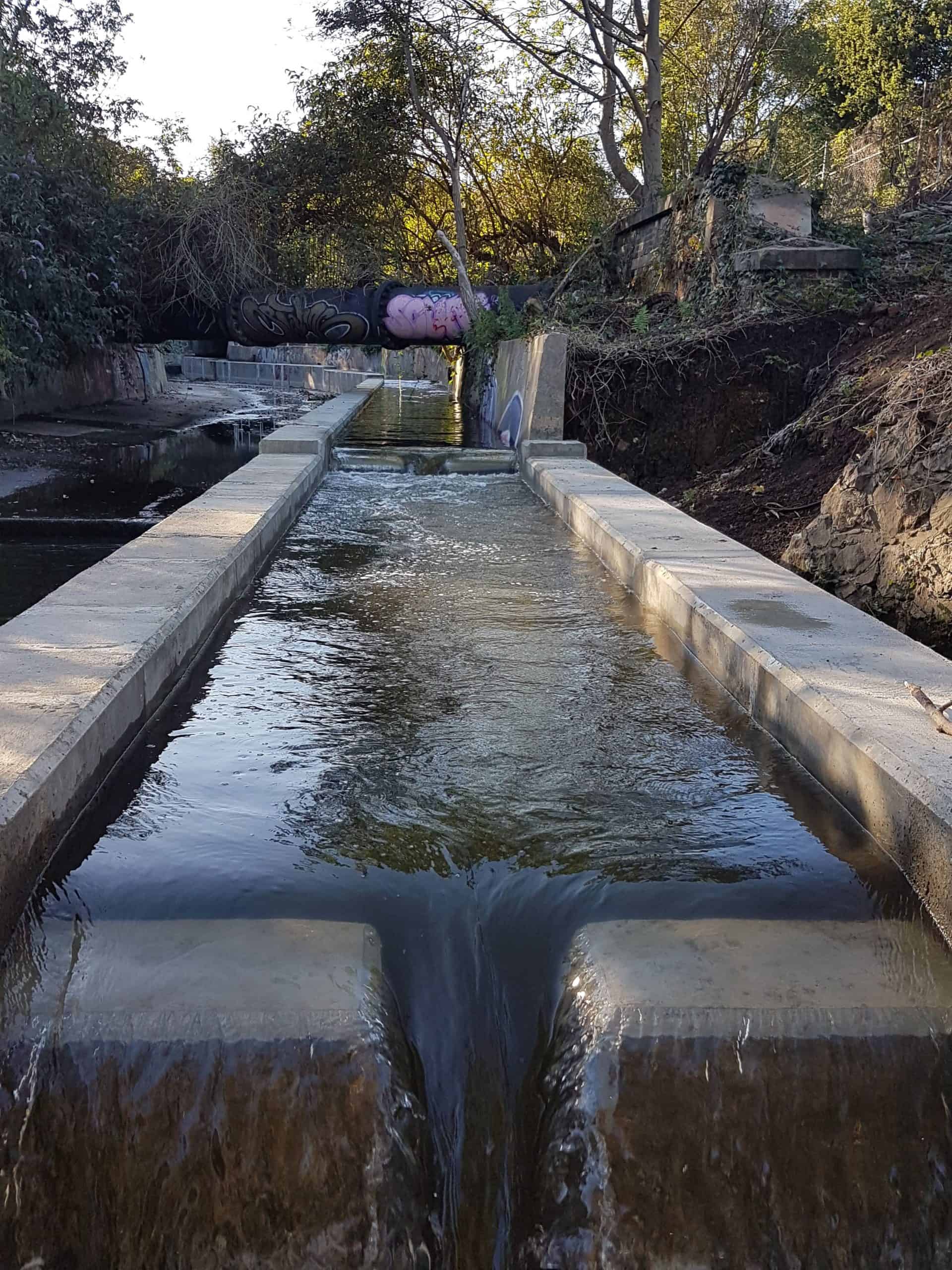
A fish pass on the Hogsmill river © South East Rivers Trust
Reconnecting the Hogsmill through urban infrastructure
One of the most technically challenging sections of the project was within the Hogsmill Sewage Treatment Works, where a concrete channel, steep slope and multiple weirs created significant barriers to fish movement.
To reconnect this stretch of river, the South East Rivers Trust installed:
- a rock ramp at the lower section of the site
- a pool pass through the upper concrete channel
Although highly engineered, this solution was the most effective way to restore fish passage within a heavily urbanised environment.
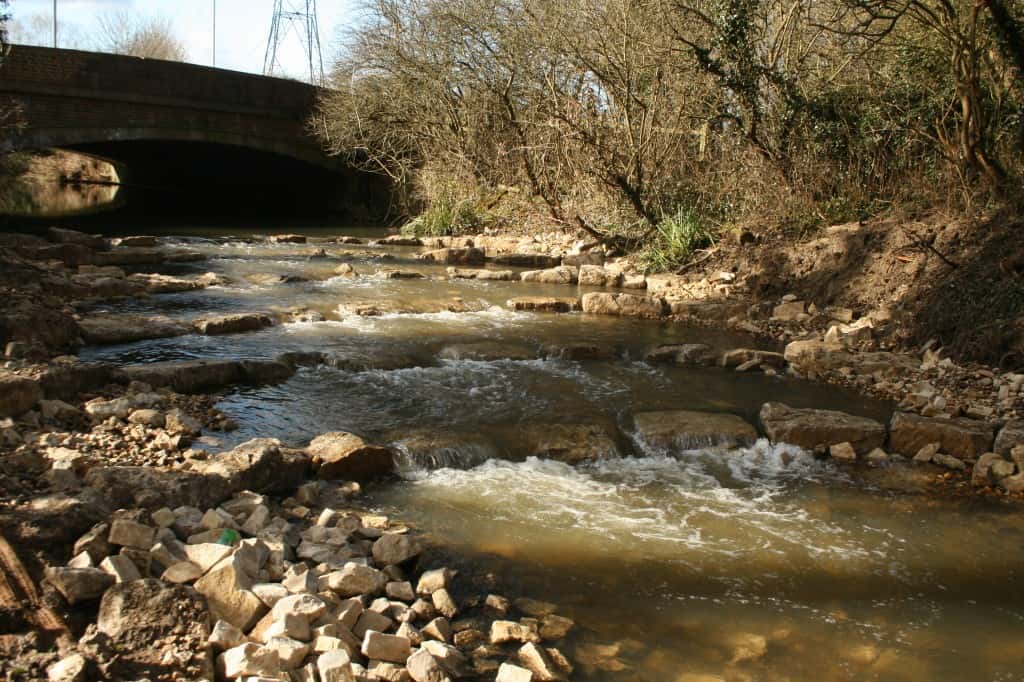
A rock ramp on the Hogsmill river © South East Rivers Trust
Project impact
The Hogsmill Connectivity Project has reopened more than 6 km of river habitat that was previously inaccessible to fish.
This long-term programme has helped:
- improve river resilience
- restore natural river processes
- reconnect fragmented habitats
- support healthier fish populations
- increase biodiversity across the catchment
The project also provides valuable learning that can be applied to river restoration projects across other catchments in the South East.
Looking ahead
Healthy rivers depend on connectivity. By removing and improving barriers along the Hogsmill, the South East Rivers Trust is helping create a river that works better for wildlife, people and the wider environment.
The success of the Hogsmill Connectivity Project continues to inform future river restoration work across our catchments, supporting more resilient rivers in a changing climate.
Help rivers flow freely again
Projects like this help remove barriers, restore habitats and create healthier rivers for wildlife and communities. Your donation helps us deliver more river restoration projects across the South East.