Restoring Kent’s floodplains to build flood and drought resilience.
Across 18 hectares of the Upper Beult catchment in Kent, we have been restoring the landscape to hold water more naturally.
By creating ponds and scrapes, reconnecting watercourses with the floodplain and slowing the flow of water, this project is helping to reduce flood risk, support drought resilience, improve water quality and create healthier wetland habitats for wildlife.
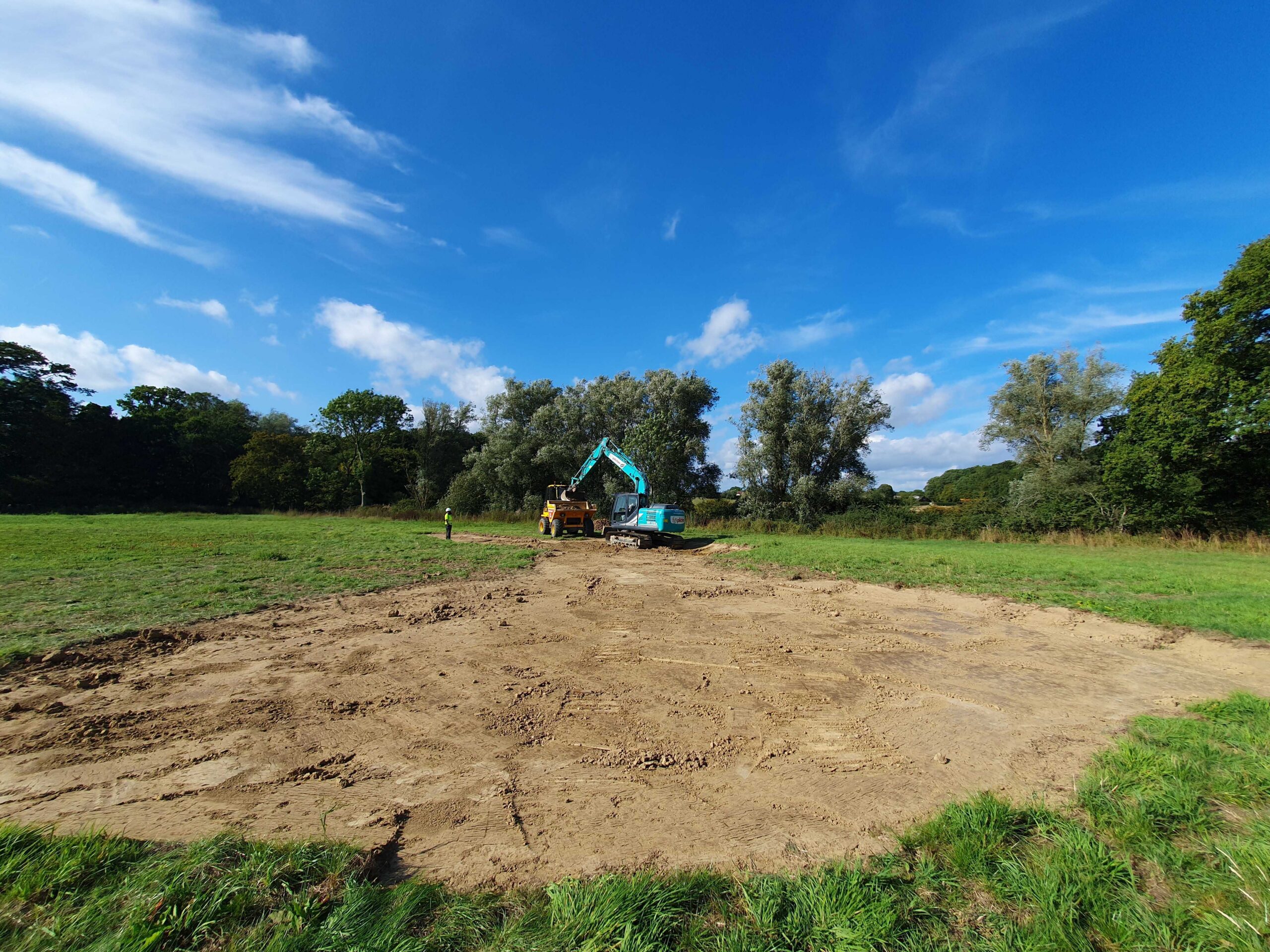
A scrape in development at the Upper Beult project site © South East Rivers Trust
About the project
The Upper Beult Resilience Pilots show how Natural Flood Management and nature-based solutions can help rivers and floodplains work more naturally.
Funded by Southern Water, the project builds on earlier PROWATER work and explores how nature-based solutions can support future water resource management in one of the most water-stressed regions of the UK.
With climate change, population growth and more extreme weather placing growing pressure on rivers, storing more water in the landscape is vital. Healthy floodplains can act like a sponge, holding water during heavy rain and releasing it more slowly during dry periods.
The project was co-designed with six local landowners, who are being paid by Southern Water to host and monitor natural interventions. This creates an innovative model for private finance in river and floodplain restoration.
From research to restoration
The Upper Beult Resilience Pilots grew from our earlier PROWATER programme, which investigated how nature-based solutions could make water supplies and landscapes more resilient.
The River Beult was one of three South East demonstration areas where we studied how features such as wetlands, healthy soils and connected floodplains could store water and release it more gradually.
PROWATER combined monitoring, mapping and practical trials to identify where landscape restoration could have the greatest impact.
We used that evidence to help shape the Upper Beult pilots, moving from research into large-scale practical restoration with local landowners.
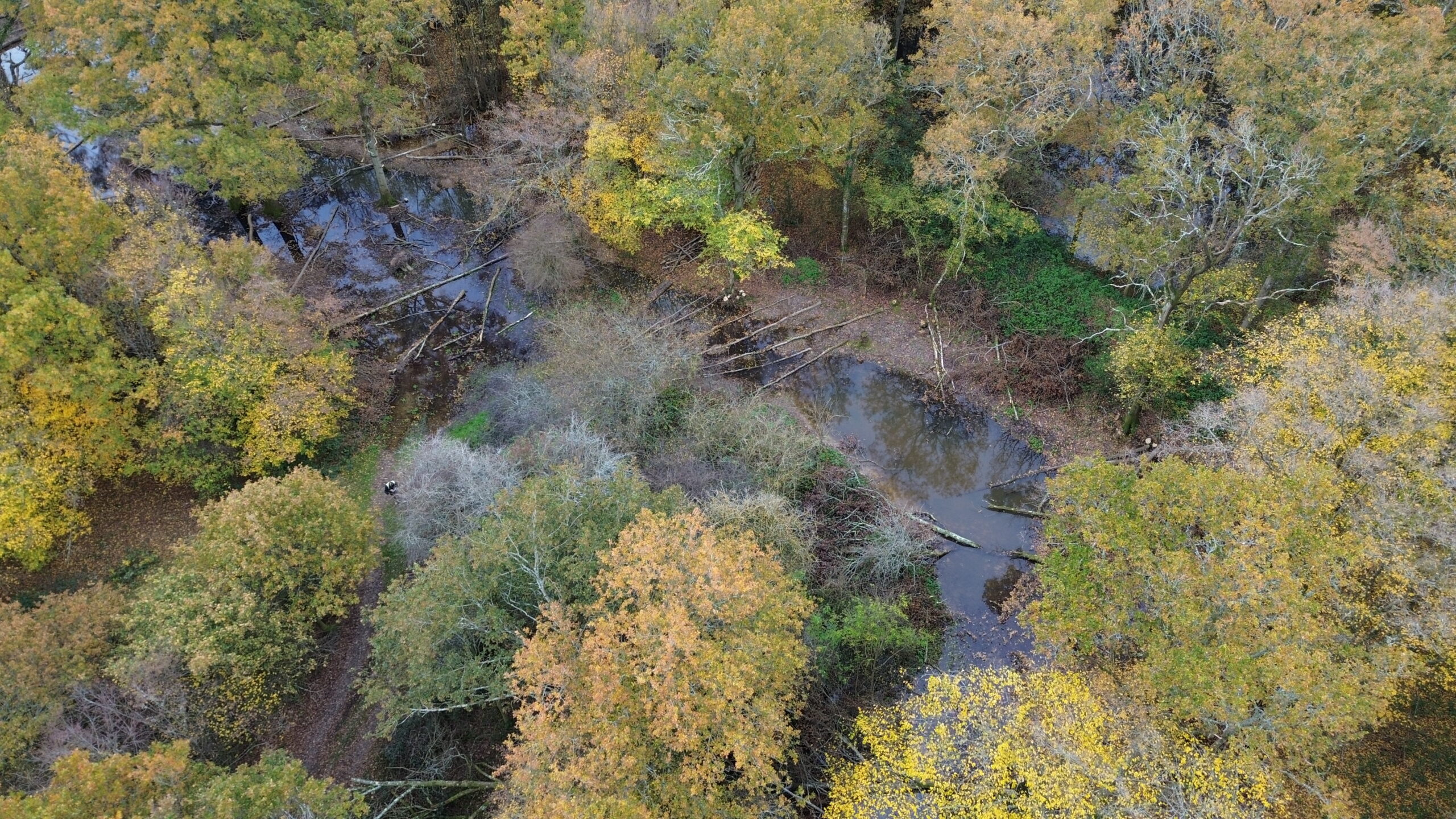
An aerial view of wetted woodlands at the Upper Beult project site © South East Rivers Trust
Why was this project needed?
Like many rivers in the South East, the Upper Beult has been changed over centuries through drainage, straightening and agricultural land management.
Wetland areas were filled in, and natural braided channels were turned into straight, deep ditches. This disconnected the river from its floodplain, meaning water moved through the landscape too quickly.
This led to:
- Higher flood peaks after heavy rain
- Less water being stored in the landscape during dry weather
- Reduced wetland habitat for wildlife
- Fewer natural features to slow and filter water
As the climate changes, the South East is experiencing more intense rainfall and longer dry periods. To help protect homes, farmland, rivers and wildlife, we need floodplains that can store water naturally, slow the flow and support healthier river systems.
What we did
Working with landowners and partners, we delivered natural flood management and river restoration measures at two pilot sites: Shadoxhurst and Brissenden Green.
The project included:
- Collecting multi-year baseline data on flow, water quality and biodiversity to help plan the work and monitor its long-term impact
- Infilling 390 metres of channel and raising 850 metres of riverbed so water can spread across the floodplain again
- Creating 28 ponds and scrapes to store water and create wetland habitat
- Diverting 173 metres of field ditches through wetlands to slow and filter runoff
- Installing more than 40 large wood features and leaky dams to increase natural flow resistance
- Excavating an old meander to restore a more natural river shape
- Tree thinning and hedgerow planting to support wildlife, stabilise soils and improve habitat connections
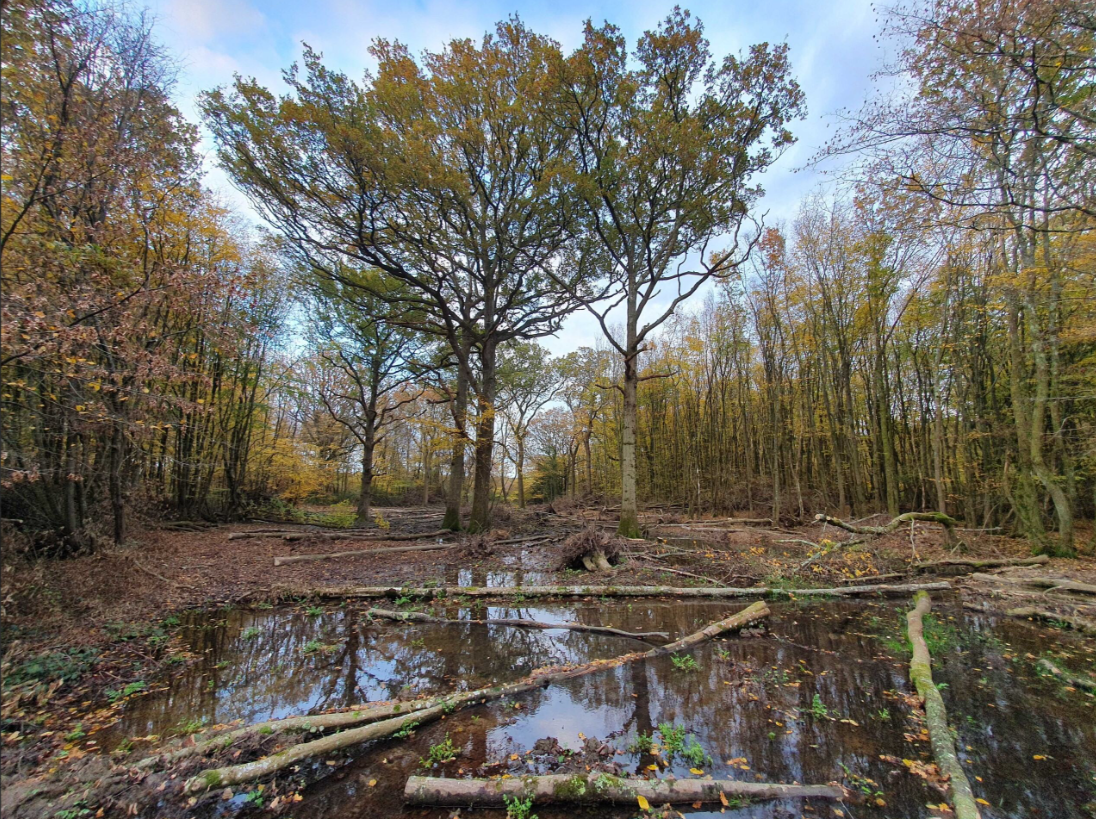
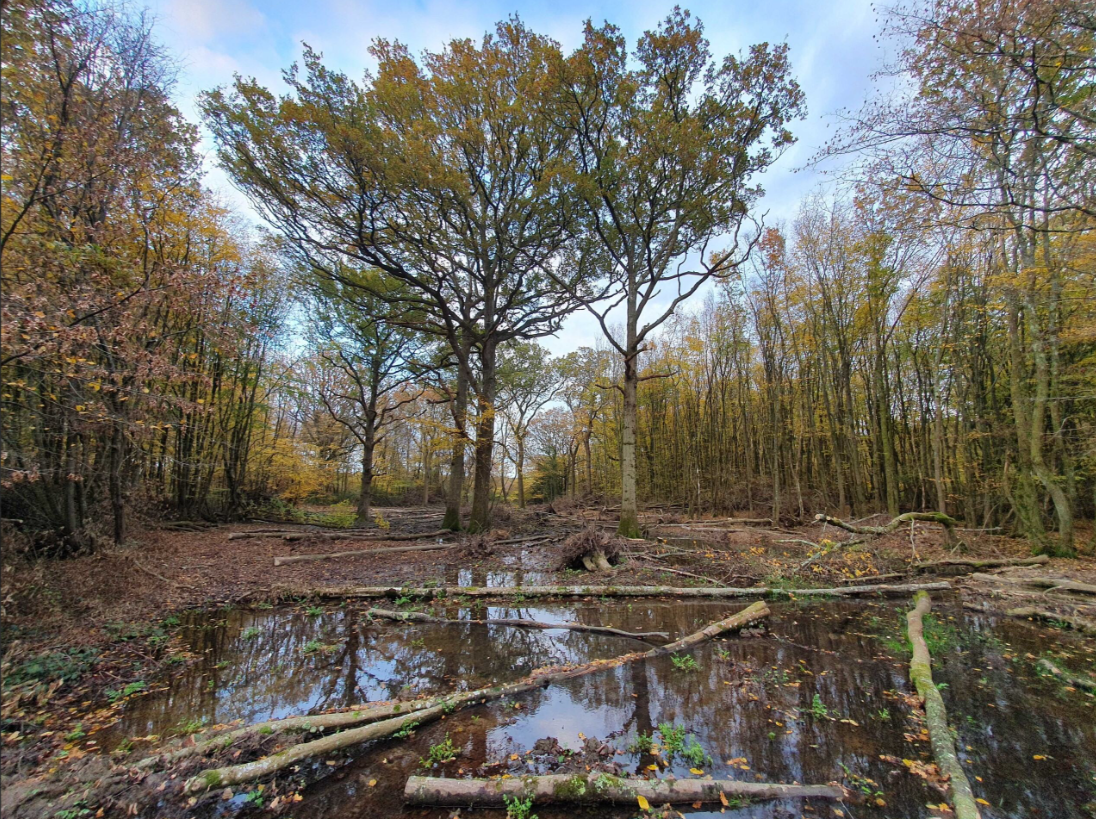
A natural pond in the Upper Beult woodland © South East Rivers Trust
What it looks like now
Footage from landowners shows water spreading across the landscape, filtering slowly through scrapes and soaking into the ground. This is a floodplain beginning to work more naturally again.
What may look untidy is a positive sign of nature recovering. Complex habitats are forming, water is staying in the landscape for longer and the floodplain is absorbing water instead of sending it quickly downstream.
Early signs include:
- New wetland habitats emerging
- Standing water remaining for weeks after rainfall
- Wildlife returning, including waders and amphibians
- Slower flows across the restored floodplain
These are encouraging early indicators of a healthier, more climate-resilient river system.
The impact
Over time, this work will help to:
- Reduce flood risk by slowing storm flows
- Support drought resilience by holding more water in soils and wetlands
- Improve water quality through natural filtration
- Increase biodiversity by reconnecting wetland, woodland and floodplain habitats
- Build evidence for future nature-based solutions across the South East
We collected more than two years of baseline data before the work began and will continue monitoring water quantity, water quality and biodiversity to measure long-term outcomes.
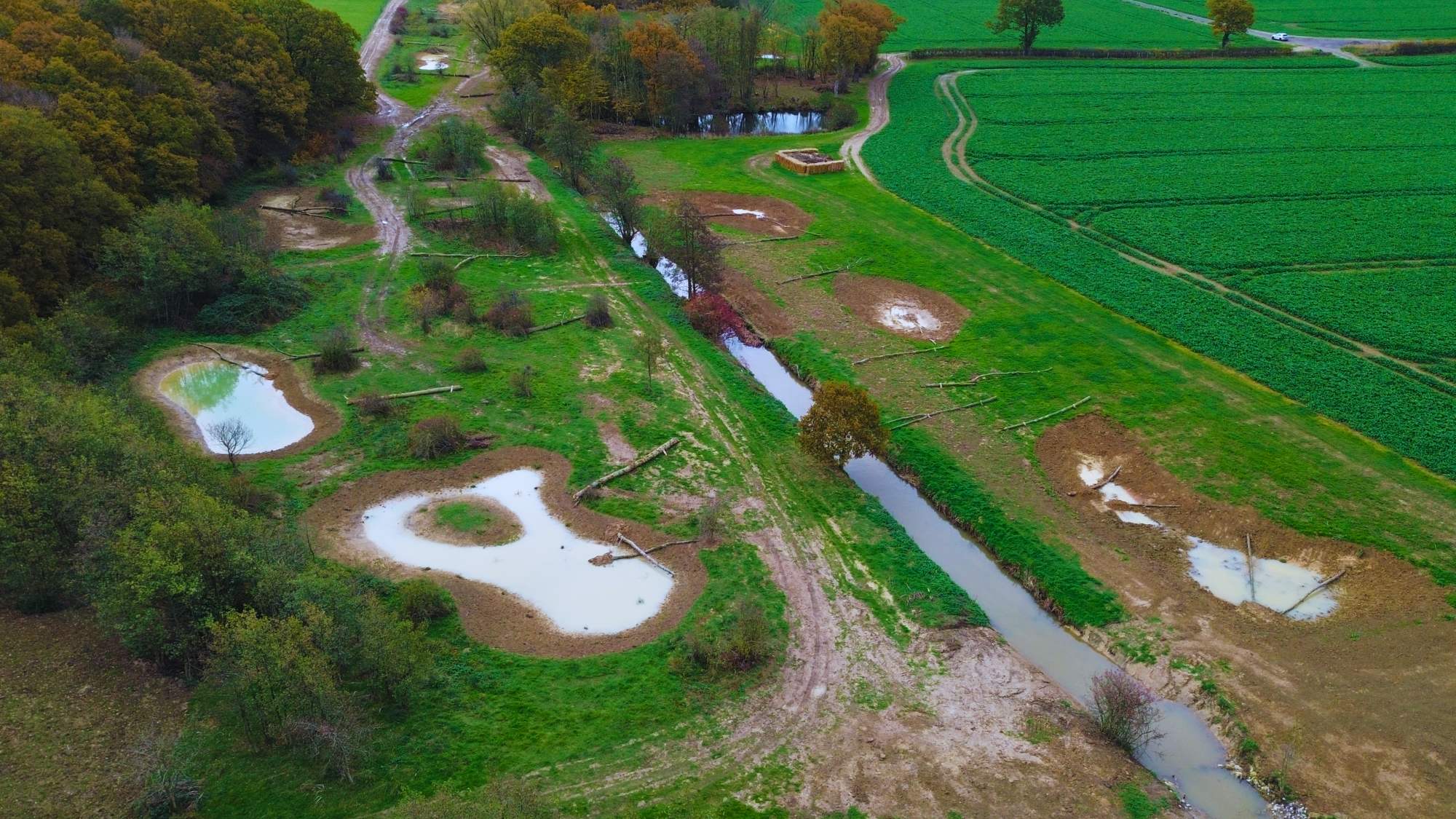
An aerial view of the scrapes at a River Beult project site © South East Rivers Trust
What’s next?
This pilot is an important step towards catchment-scale natural flood management on the Upper Beult.
We will continue monitoring the sites, working with landowners and using what we learn to help scale up nature-based solutions across the South East. The sites are also being used to demonstrate river and floodplain restoration in action through tours, nature-based solution safaris and education visits.
Partners and supporters
This project was funded by Southern Water, with support from Binnies Ltd, Kent Wildlife Trust, Kent County Council, Forestry Commission, Environment Agency and the Upper Beult Farm Cluster.
It was delivered in collaboration with landowners at Moat Farm, Green Farm, Mincing Court Farm and Little Oak Farm.
Work with us to restore rivers and manage water naturally
We work with farmers and landowners to create practical, nature-based solutions that slow the flow, store water and support wildlife.