Project overview
The River Teise, a tributary of the Medway, has been heavily modified over time, with barriers and altered habitats limiting how it functions.
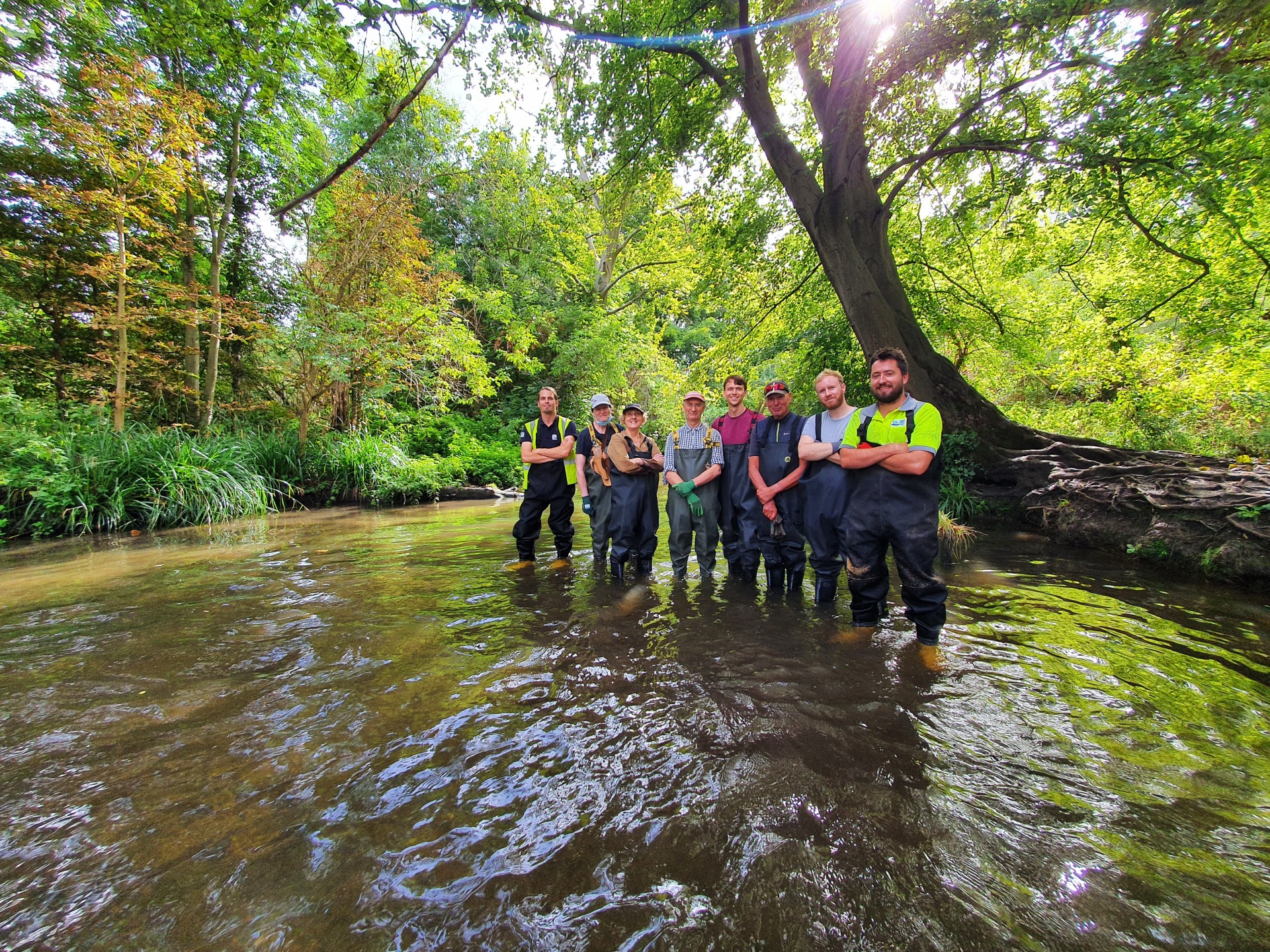
Since 2016, we’ve been working to restore natural processes—improving fish passage, enhancing habitats and supporting a healthier river for people and wildlife.
About the River Teise
Like many rivers in England, the Teise has been straightened, widened and deepened for industry and agriculture.
This has led to:
- Reduced habitat diversity
- Barriers to fish movement
- Irregular flows and poorer water quality
Parts of the river currently fail to meet “good” ecological status. With increasing pressures from climate change and water demand, restoring the river is essential for its long-term health.
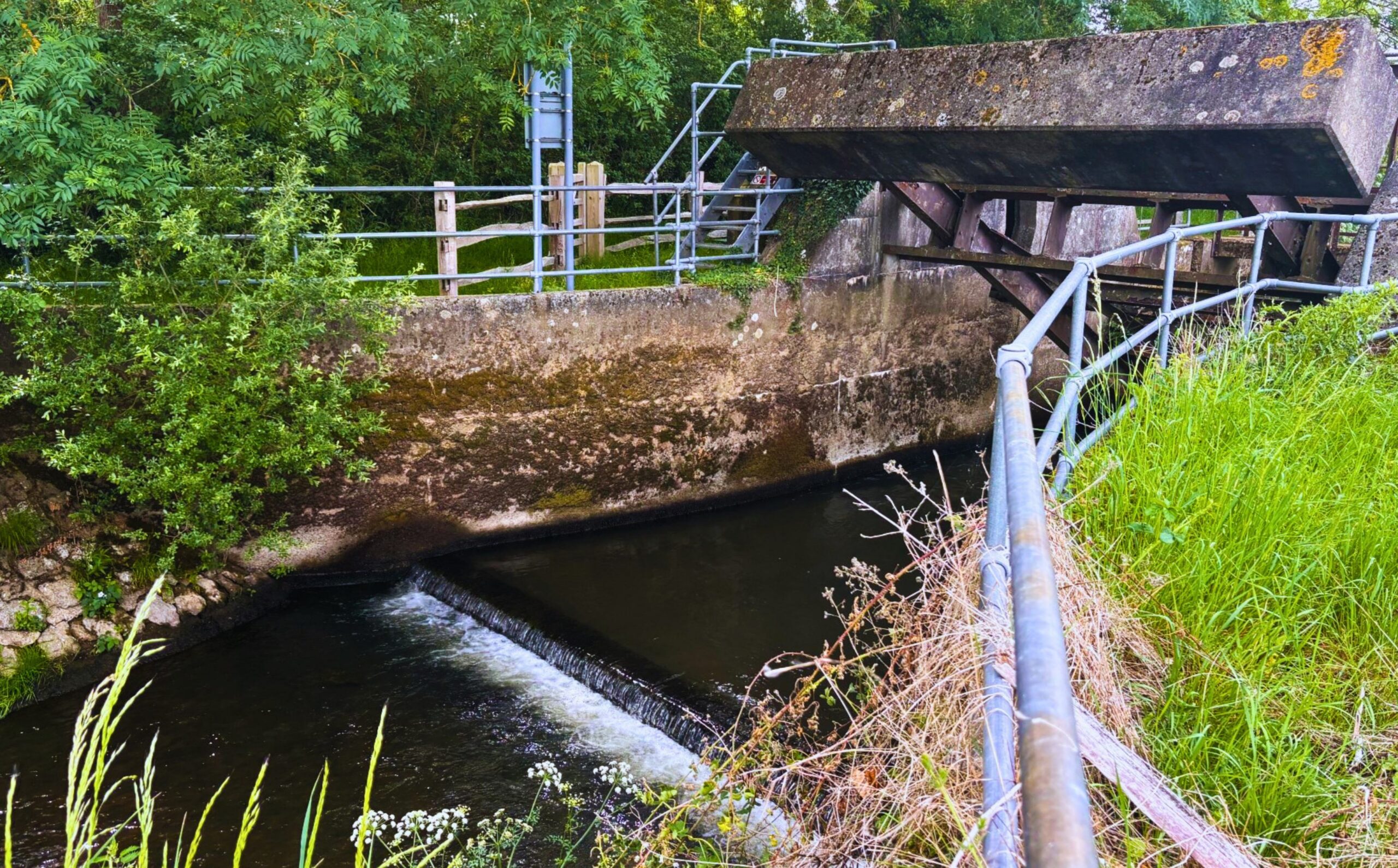
A weir on the Lower Teise © South East Rivers Trust
What we’re doing
We are taking a catchment-scale approach, combining data, partnerships and practical action.
This includes:
- Understanding pressures through data and monitoring
- Working with landowners to identify solutions
- Delivering targeted habitat improvements
- Building on earlier restoration to create long-term change
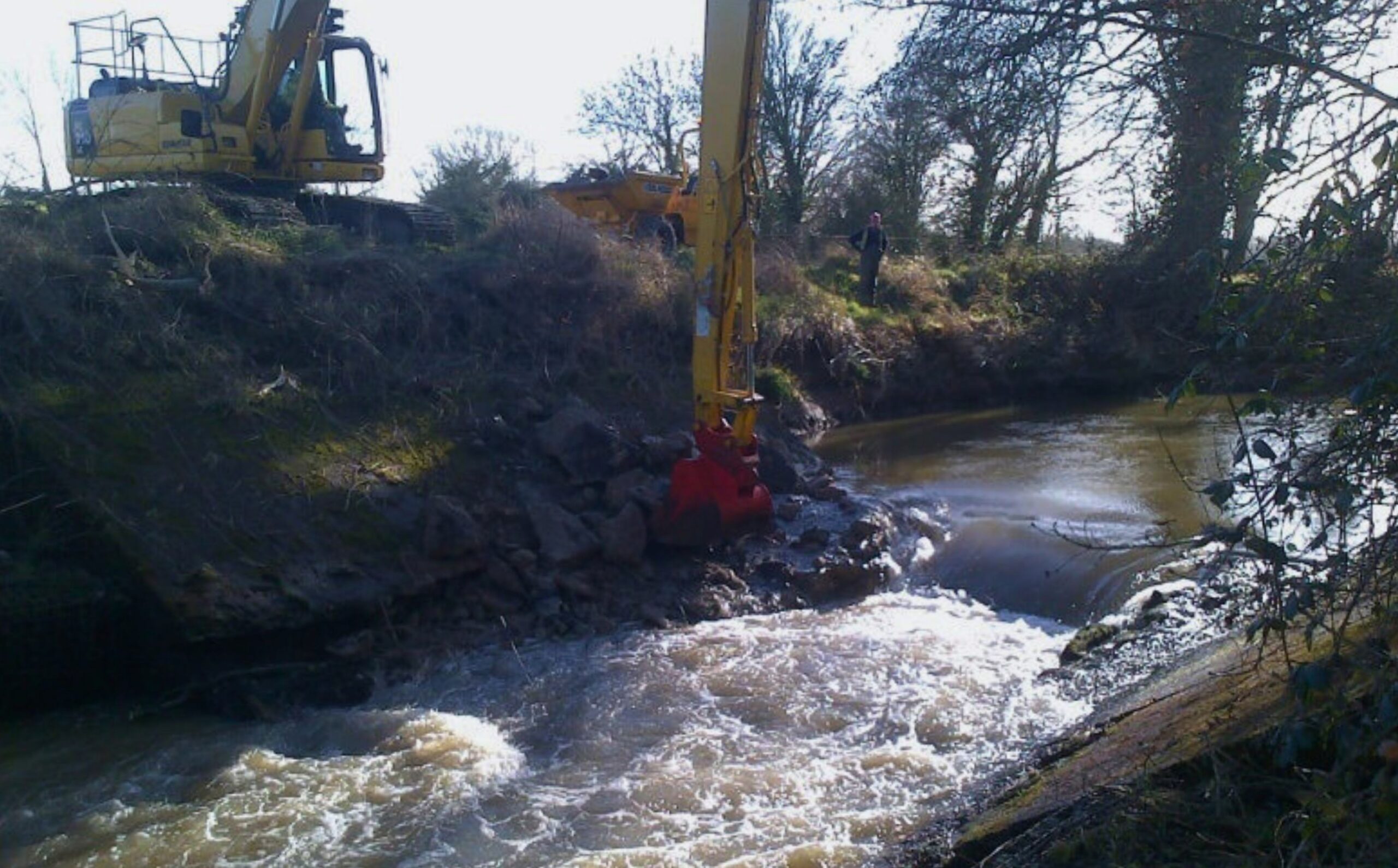
Weir removal on the River Teise © South East Rivers Trust
How we’re restoring the river
We are using a range of techniques to help the river function more naturally, including:
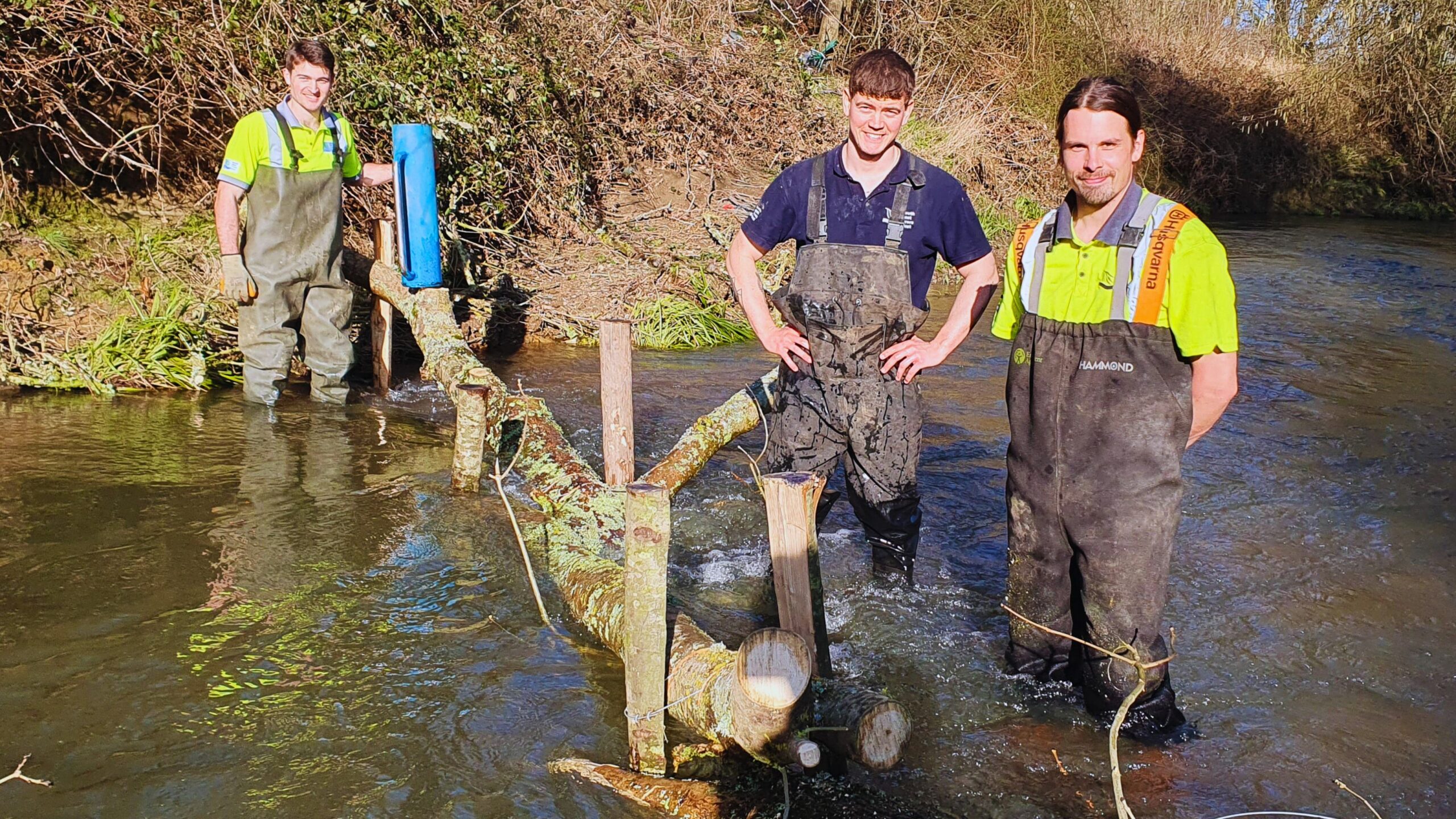
- Leaky woody structures to create varied flows and habitats
- Wetland restoration to store water and support wildlife
- Tree planting to improve riverbank habitat and provide shade
- Removing or adapting weirs to improve fish passage
- Creating backwaters to provide refuge for wildlife
Removing barriers and reconnecting the river
Restoration began with removing barriers that were preventing the river from functioning naturally.
In 2016, Harper’s Weir was removed, followed by Gatehouse, New Lodge and Dairy House weirs on the Lesser Teise—reconnecting the river and enabling recovery.
Weir removals (2015–2016)
Around 250 tonnes of concrete and steel were removed from the river, with banks restored using natural materials.
This resulted in:
- Over 1 km of river reconnected upstream
- More than 3 km of channel opened for fish passage
- Natural features such as gravels and riffles restored
- New habitats created along the river margins
Habitat improvements in action
Creating a backwater (2023)
A 20 × 8 metre backwater was created near Goudhurst, restoring part of the river’s historic channel.
This provides refuge during high flows and pollution events, while supporting aquatic wildlife and biodiversity.
Habitat restoration (2025)
Further improvements have focused on restoring natural processes and increasing habitat diversity.
Key features include:
- Flow deflectors to increase flow variation
- Brash berms to narrow the channel and improve habitat
- Lunker structures to provide refuge for young fish
- Large woody material to clean gravels and create cover
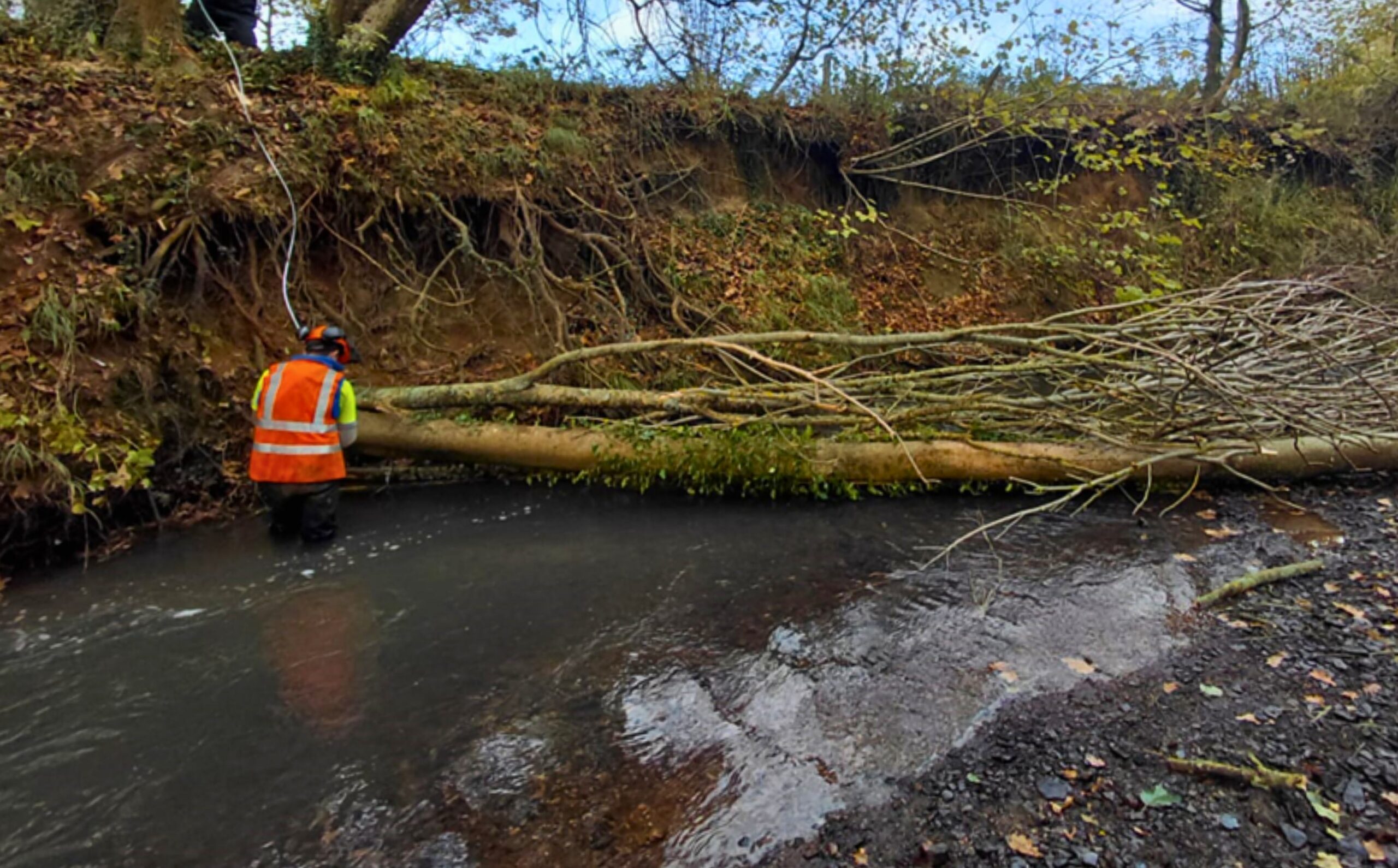
A felled tree placed in the River Teise © South East Rivers Trust
Project impact
What we’re seeing now
The river is continuing to respond to restoration, with:
- Cleaner, better-sorted gravels
- More natural flow patterns
- Improved habitat for fish and wildlife
Local anglers have also reported clearer water and better spawning conditions, providing valuable insight into how the river is recovering.
Get involved
Sign up to our newsletter to stay up to date with project news and find out about upcoming volunteering opportunities.