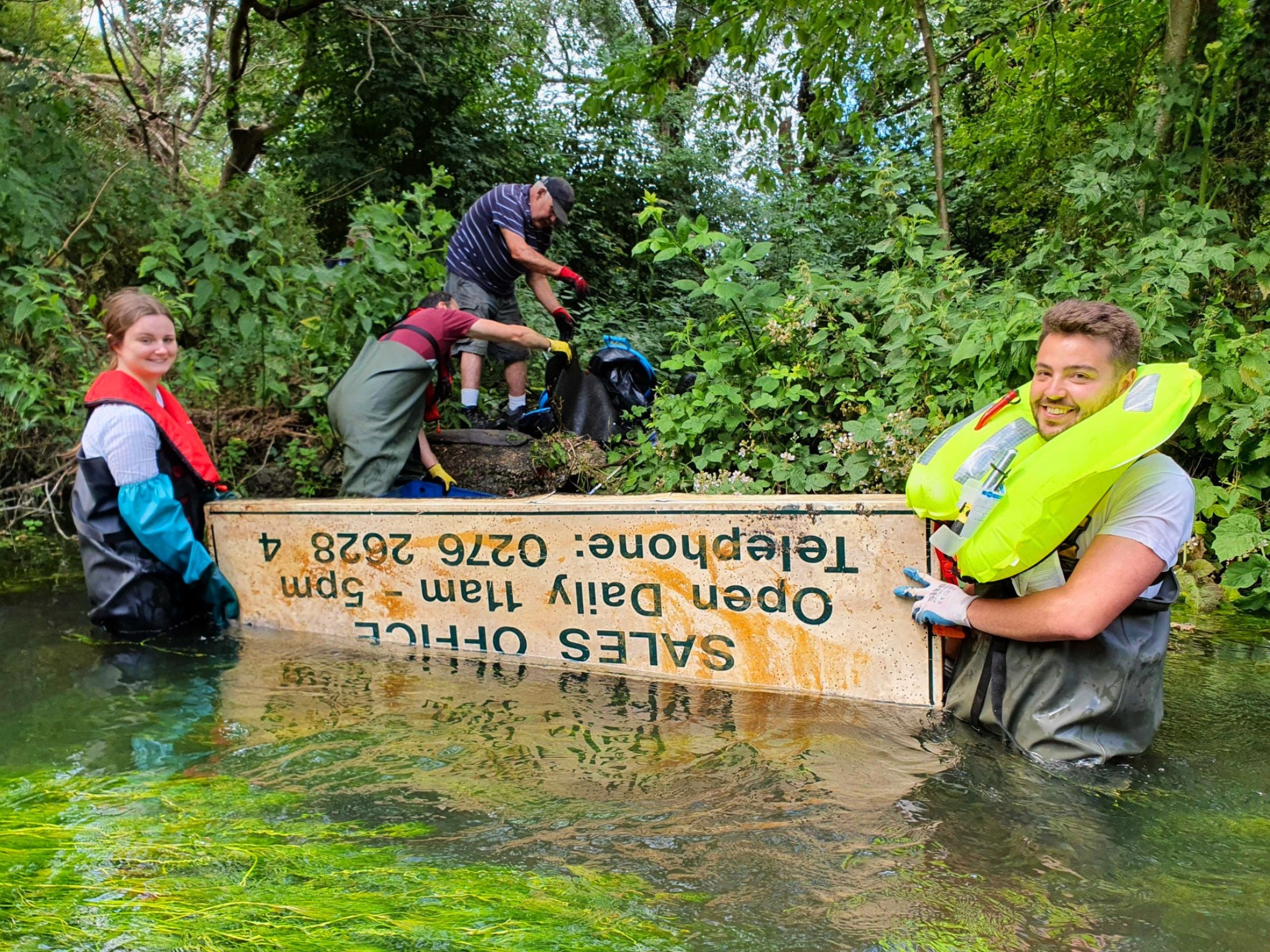
Restoring a London chalk stream
The South East Rivers Trust transformed the Carshalton Arm of the River Wandle, helping it become the first river in London to achieve ‘Good Ecological Potential’ under the EU Water Framework Directive.
By improving fish passage, restoring river habitat and tackling urban pollution, this award-winning project helped bring the river back to life. Today, brown trout are once again successfully reproducing in the Wandle for the first time in more than 80 years.
In recognition of this work, the project won the Urban Category of the 2016 UK River Prize.
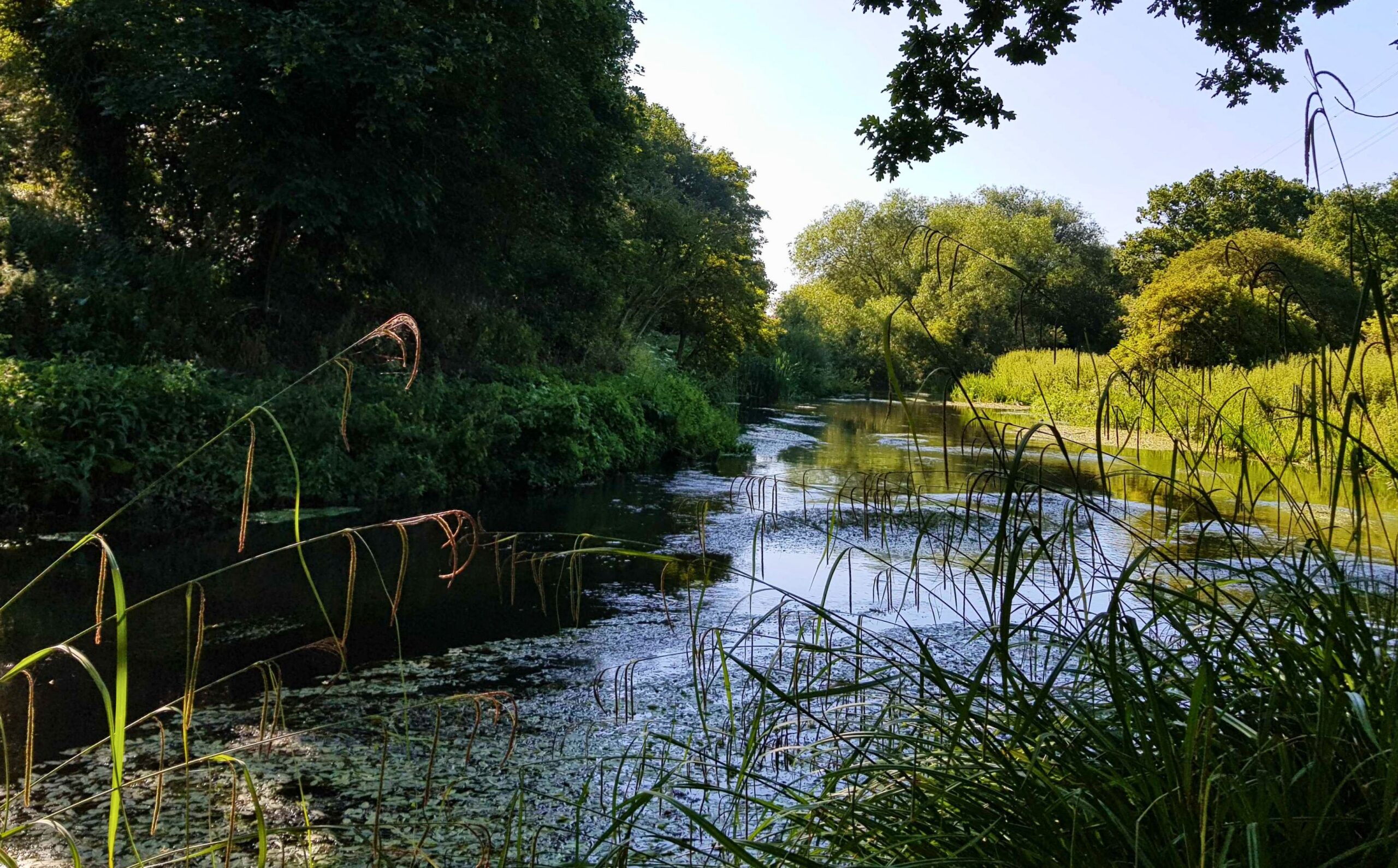
The River Wandle at Sutton © South East Rivers Trust
Bringing the Wandle back from decline
The River Wandle is a rare chalk stream that flows through South London. The river has two branches, and this project focused on the Carshalton Arm, which rises from natural springs in Carshalton before joining the main Wandle at Hackbridge.
Like many urban rivers, the Carshalton Arm was heavily modified over time to make space for roads, buildings and industry. The channel became over-engineered, lacking the natural features needed to support wildlife.
By the 1960s, the Wandle was widely described as biologically dead and was even referred to as an “open sewer”.
This project set out to change that.
Inspiring the next generation through Trout in the Classroom
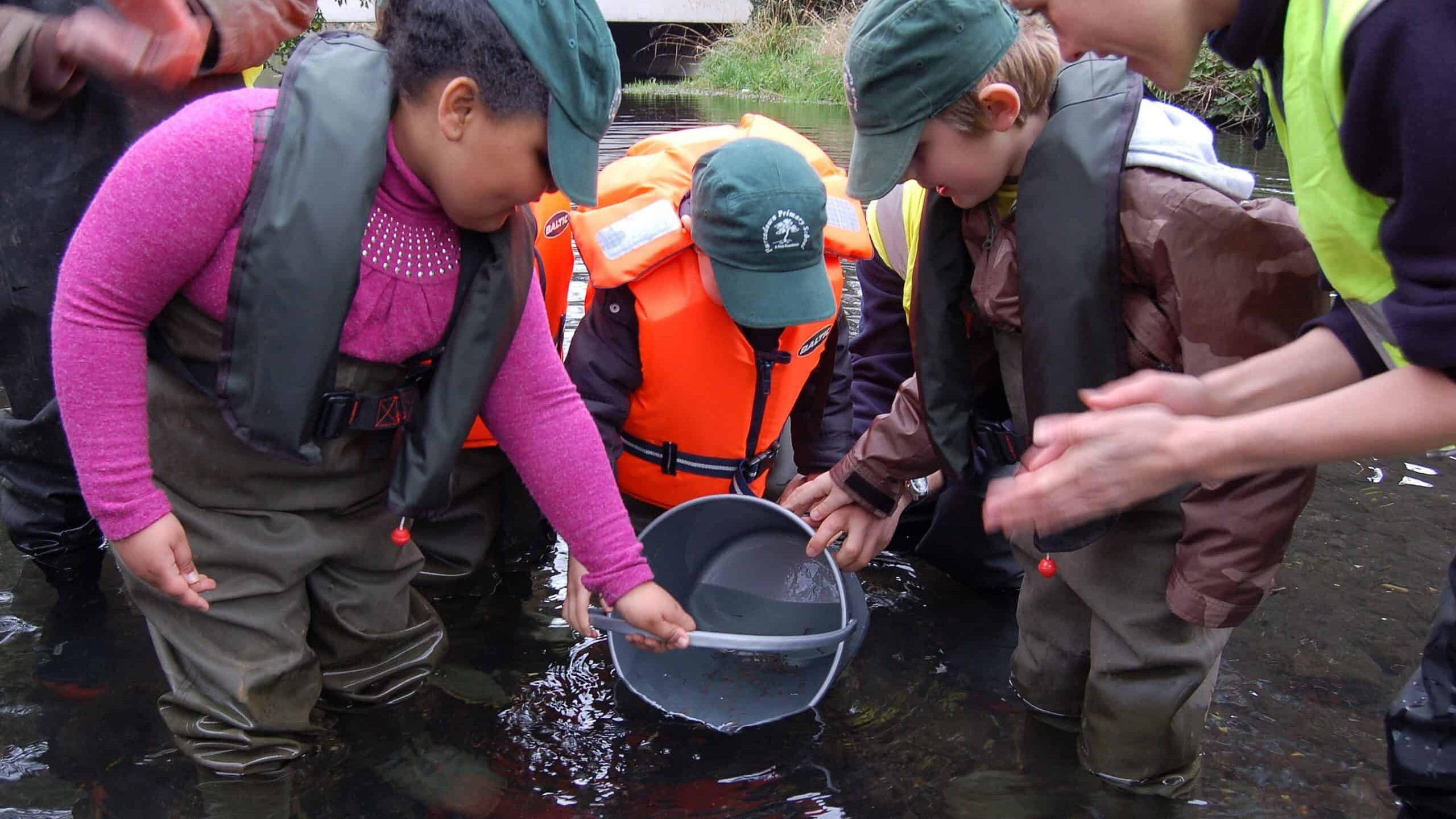
Between 2000 and 2008, the South East Rivers Trust worked with local schools to reintroduce brown trout to the river through our Trout in the Classroom programme.
The programme gives pupils the opportunity to raise brown trout from eggs in specially designed classroom tanks before releasing them into local rivers. Alongside learning about river ecology, students gain a direct connection to their local environment and the wildlife it supports.
The programme helped build local awareness of the river’s recovery while supporting the return of this iconic chalk stream species.
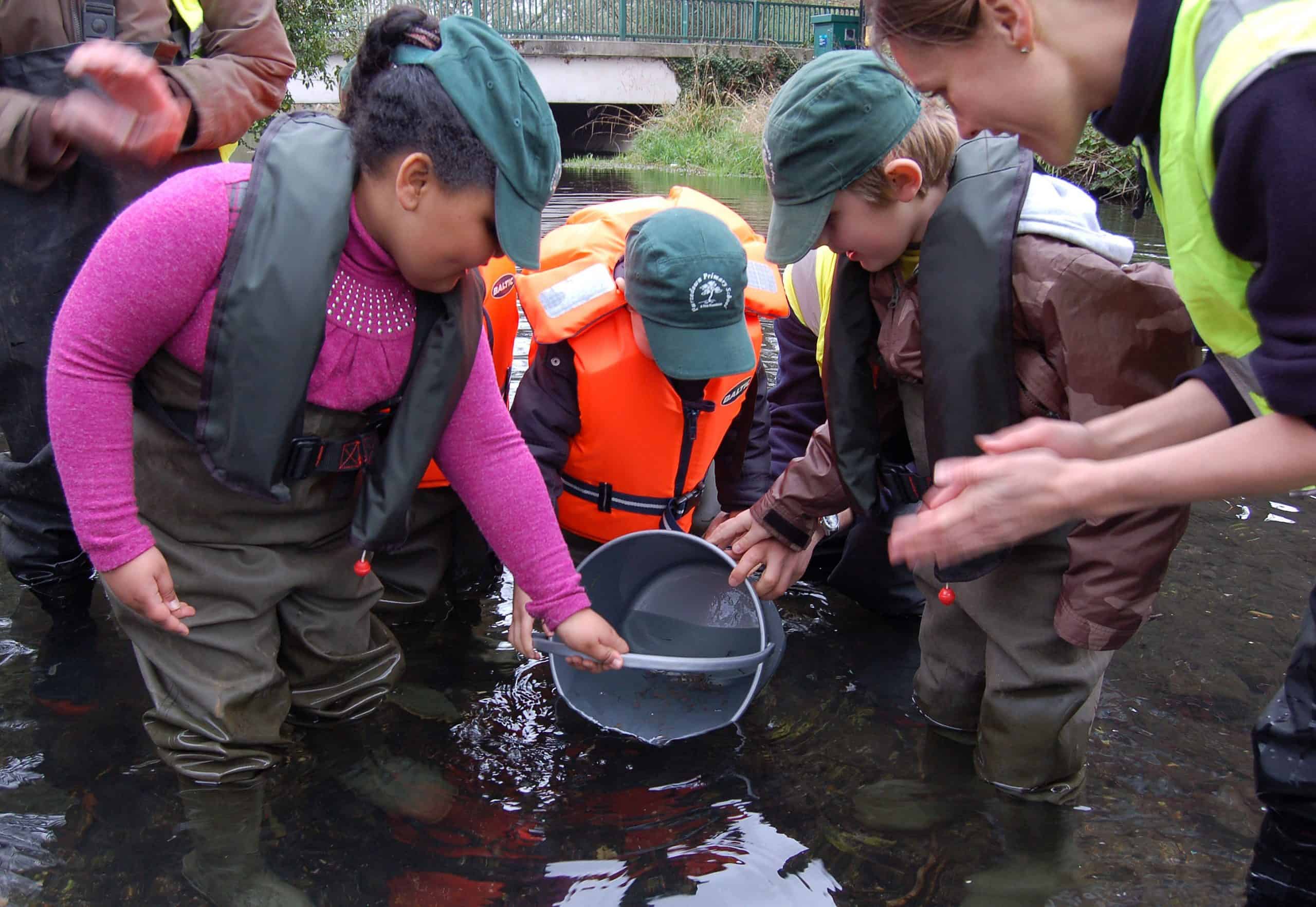
School children during a 'Trout in the Classroom' session © South East Rivers Trust
Reconnecting the river for wildlife
Weirs and other man-made barriers can prevent fish from reaching important habitats needed for feeding, shelter and spawning.
To improve connectivity along the river, the South East Rivers Trust lowered and notched four weirs along the Carshalton Arm to improve river flow and allow fish to move more freely upstream.
At the fifth and largest weir, we lowered the structure by one metre and upgraded the existing fish pass to make it more effective.
In total, the project reopened around 2.5 km of river habitat, giving fish access to cleaner gravels and new spawning areas.
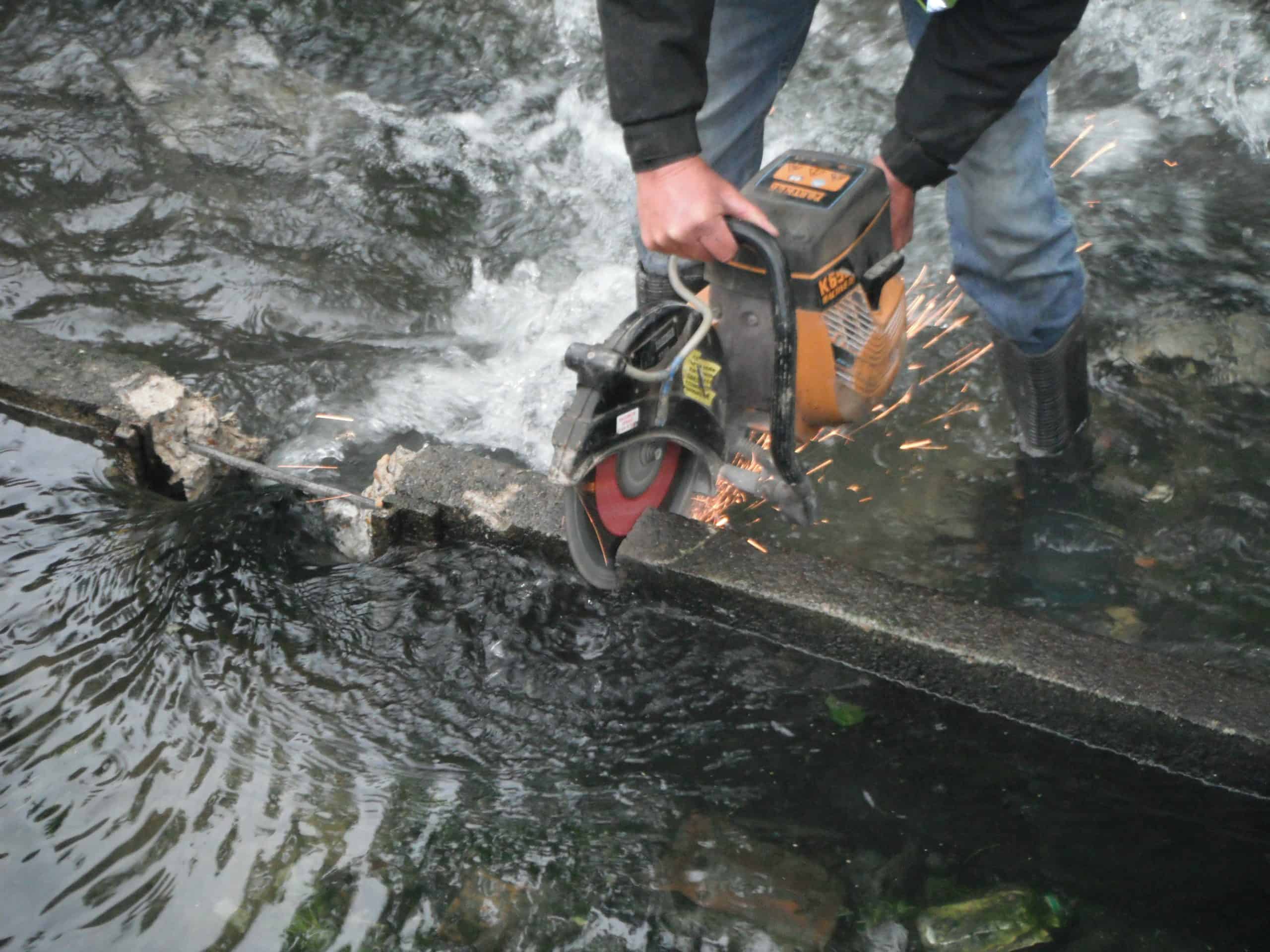
Notching a weir to allow fish passage © South East Rivers Trust
Creating healthier habitats
Using nature-based techniques, the project reshaped sections of the river to create a more natural and resilient channel.
The river was narrowed and re-meandered to improve flow diversity and create a defined low-flow channel, helping the river better cope with periods of low water and a changing climate.
To support wildlife, we added:
- 370 tonnes of clean gravel to create spawning habitat for brown trout
- Large woody material to increase habitat diversity and improve river processes
- More than 3,000 native marginal plants, installed with the help of volunteers
Together, these improvements created habitat for fish, aquatic invertebrates, plants and other river wildlife at every stage of their life cycles.
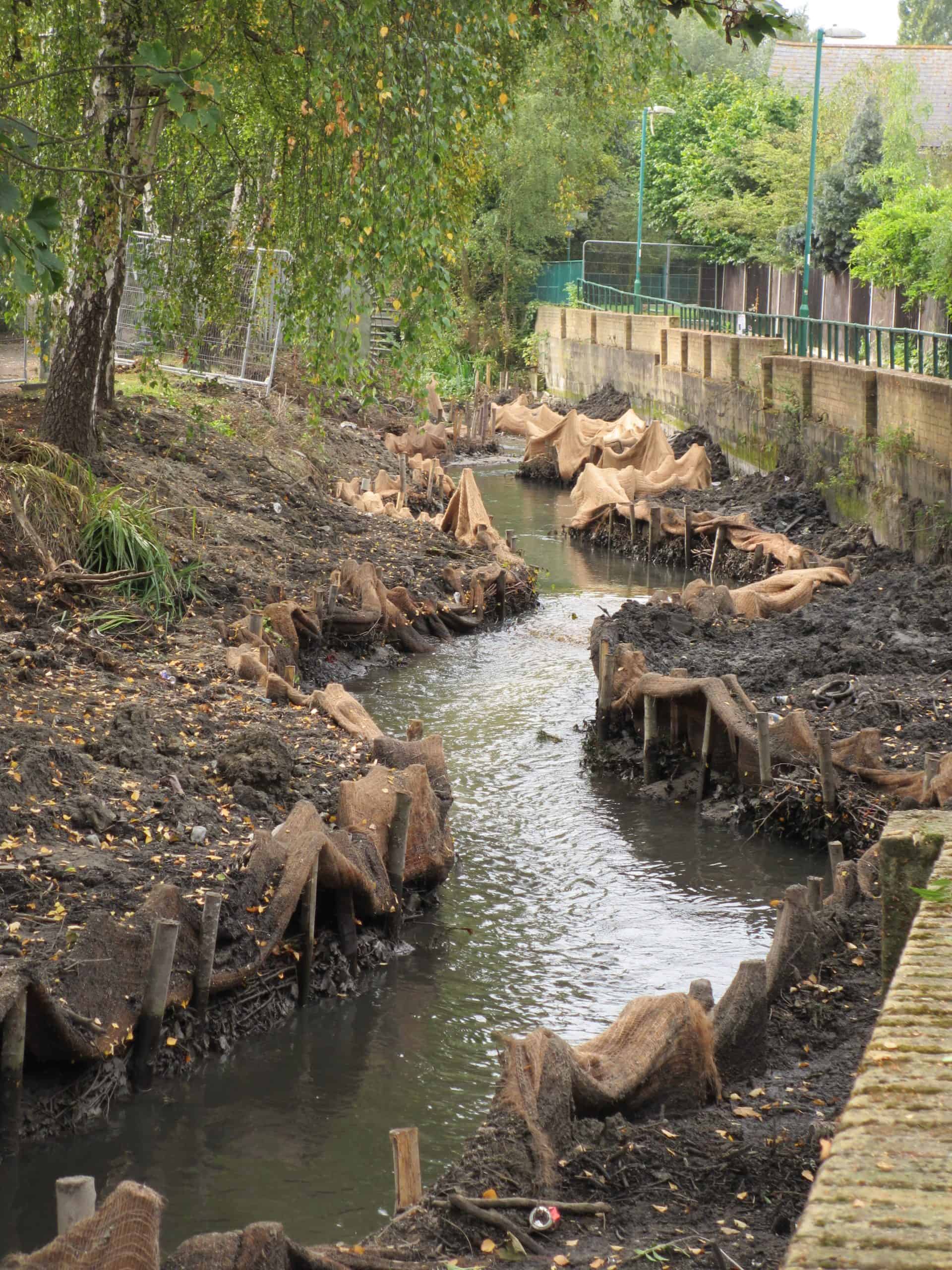
Forming a meandering channel © South East Rivers Trust
Tackling urban pollution
One of the biggest challenges facing urban rivers is polluted surface water runoff.
Roads surrounding the Carshalton Arm drained directly into the river through surface water outfalls, carrying pollutants such as oils, sediment and heavy metals into the Wandle during rainfall.
With limited space available for wetlands or above-ground treatment systems, the South East Rivers Trust installed three Hydrodynamic Vortex Chambers beneath nearby roads.
These underground treatment systems act as silt traps, capturing contaminated sediment before cleaner water enters the river.
By reducing pollution entering the Wandle, the project helped improve water quality and create healthier conditions for wildlife.
Project impact
The Upper Wandle Restoration project helped demonstrate how urban rivers can recover when habitat, connectivity and water quality are addressed together.
The project delivered:
- Improved fish passage along 2.5 km of river
- Successful brown trout reproduction for the first time in over 80 years
- New and improved habitat for wildlife
- Reduced urban pollution entering the river
- Greater community engagement through education and volunteering
The project continues to be recognised as an example of successful urban river restoration in London.
Help restore rivers like the Wandle
Projects like restoring the Upper Wandle are helping rivers recover for people and wildlife. Your donation supports practical, evidence-led action to improve river health, reconnect habitats and build more resilient catchments across the South East.