Attending an RMI training day
Rachael Edwards was our RMI trainer, and participants included some new volunteers and several new staff members from the South East Rivers Trust. Rachael explained how to risk assess a river site, the data we were going to collect, where the data goes, and how to identify riverfly.
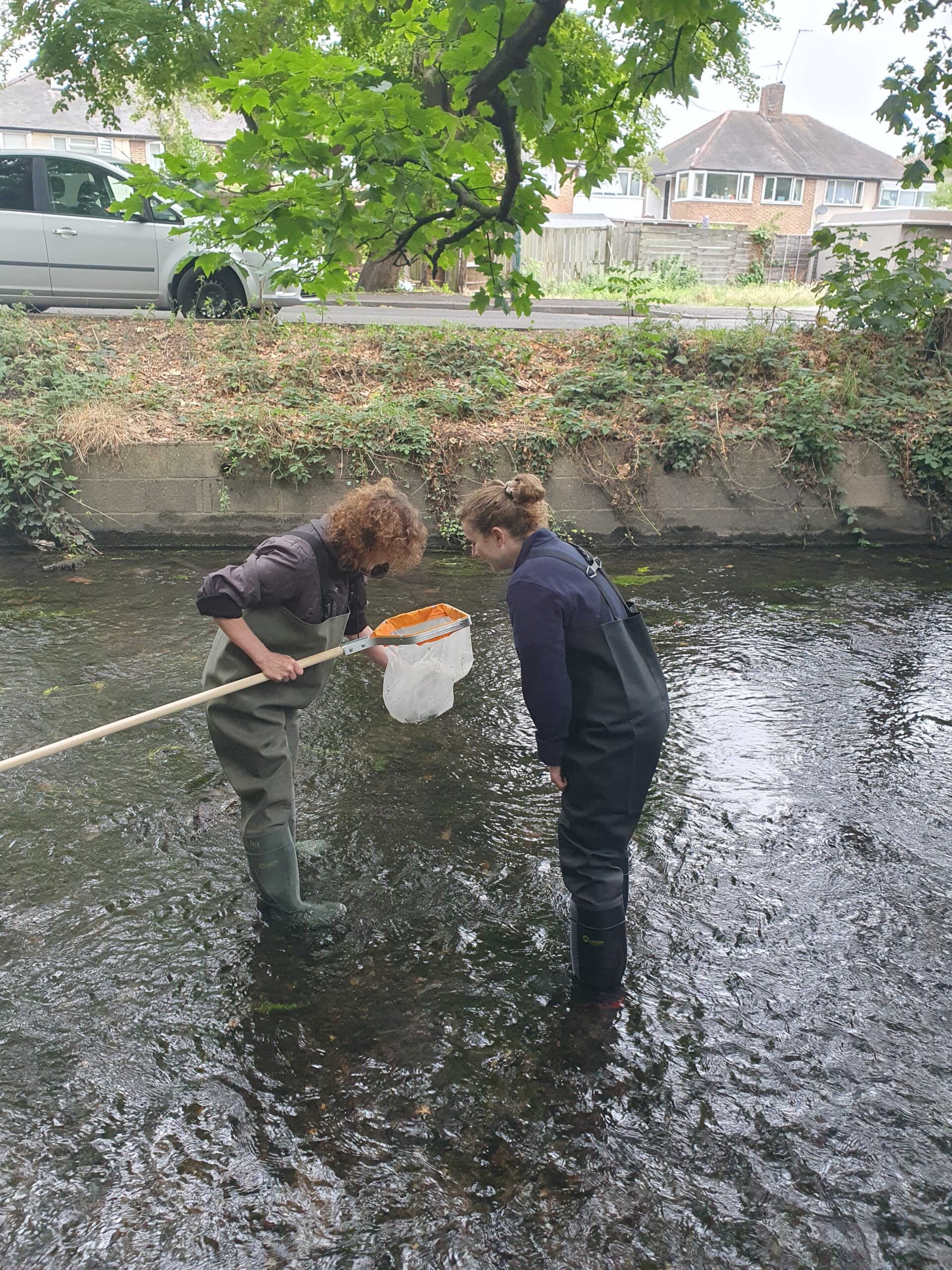
In a nutshell, riverfly monitoring involves getting in the river, taking a kick sample, and then emptying your net into a bucket or tray to identify your findings. We soon learned that there are lots of very important details to consider when identifying riverfly, and that these details are far easier to pick out in a clear photo than they are in the field. I loved learning to identify and count all the wee beasties, and their different ways of moving – wriggling, thrashing, crawling, swimming – were mesmerising!
We were taught to look out for freshwater shrimp, stoneflies, several types of up-wing flies, and caddisflies. On the day we found: cased caddisfly, freshwater shrimp and mayfly nymphs.
Rachael led an extremely informative RMI training day. It was a lovely reminder that there is so much life that lives in and around our rivers, and even though the fish, birds and plants are larger and more visible, there are plenty of unsung heroes helping our rivers thrive. By the end of the day, volunteers were motivated and prepared to return to their local patch and get involved in the monthly monitoring.
If you too would like to get involved in riverfly monitoring and be part of citizen science that provides critical evidence for recording the health of our rivers, I would massively recommend the RMI training day as both a brilliant day out and a very enjoyable introduction to a long-term river-based volunteering opportunity!
Become a riverfly monitoring volunteer
Take part in monitoring programmes such as RMI and help collect valuable data that identifies pollution and guides action to improve river health.