Project overview
The River Beult is a rare and beautiful lowland river flowing through the Kent Weald—supporting wildlife like water voles, nightingales and dragonflies, while also playing a vital role for local communities and farming.
But today, the Beult is under pressure.
Historic drainage of wetlands, pollution from roads and agriculture, and increasing climate extremes mean the river is more vulnerable to drought, flooding and poor water quality. This affects not just wildlife, but also the people and businesses that rely on this landscape.
We’re working with farmers, landowners and partners to change that—restoring natural processes across the catchment so the river, land and communities can thrive together.
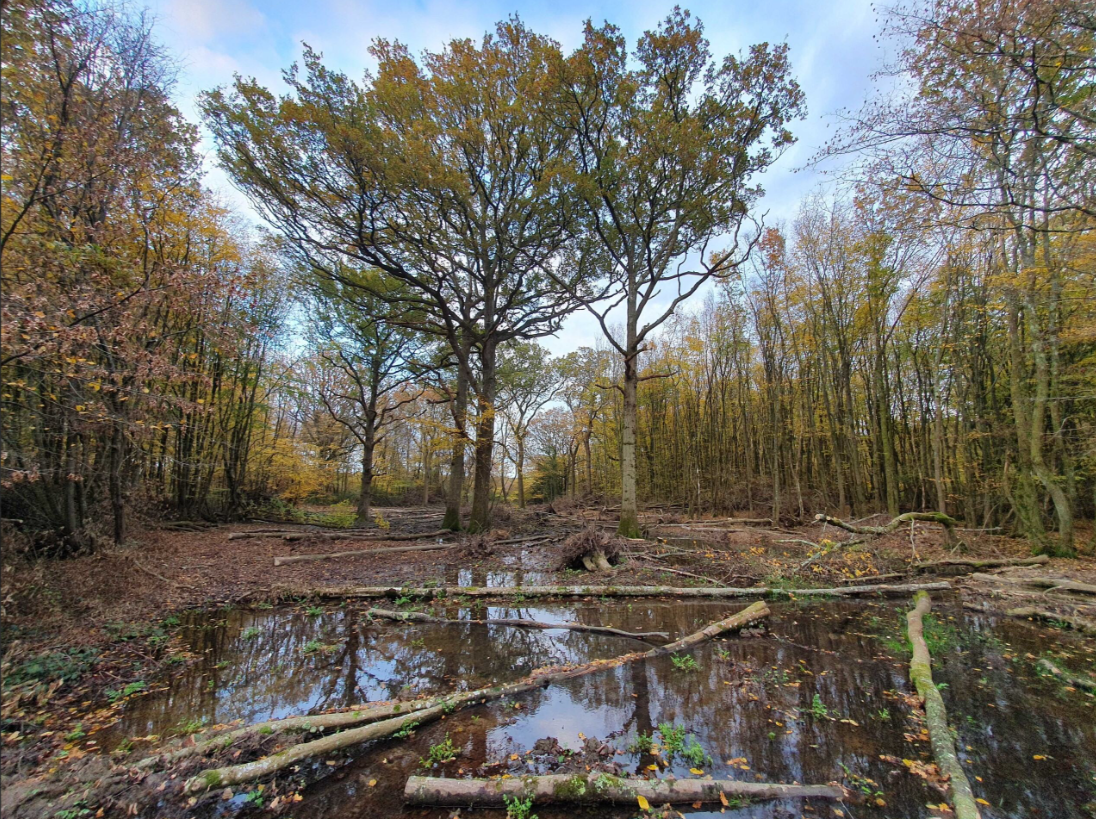
A natural pond in the Upper Beult woodland © South East Rivers Trust
Why this work matters
Only a small proportion of rivers in England are in good ecological health—and rivers like the Beult are increasingly under strain.
By restoring natural river processes, we can:
- Improve water quality for people and wildlife
- Reduce flood risk for downstream communities
- Store water in the landscape to help during droughts
- Support sustainable farming and resilient food production
- Create thriving habitats for species in decline
This is about building a healthier, more resilient river system that works for everyone.
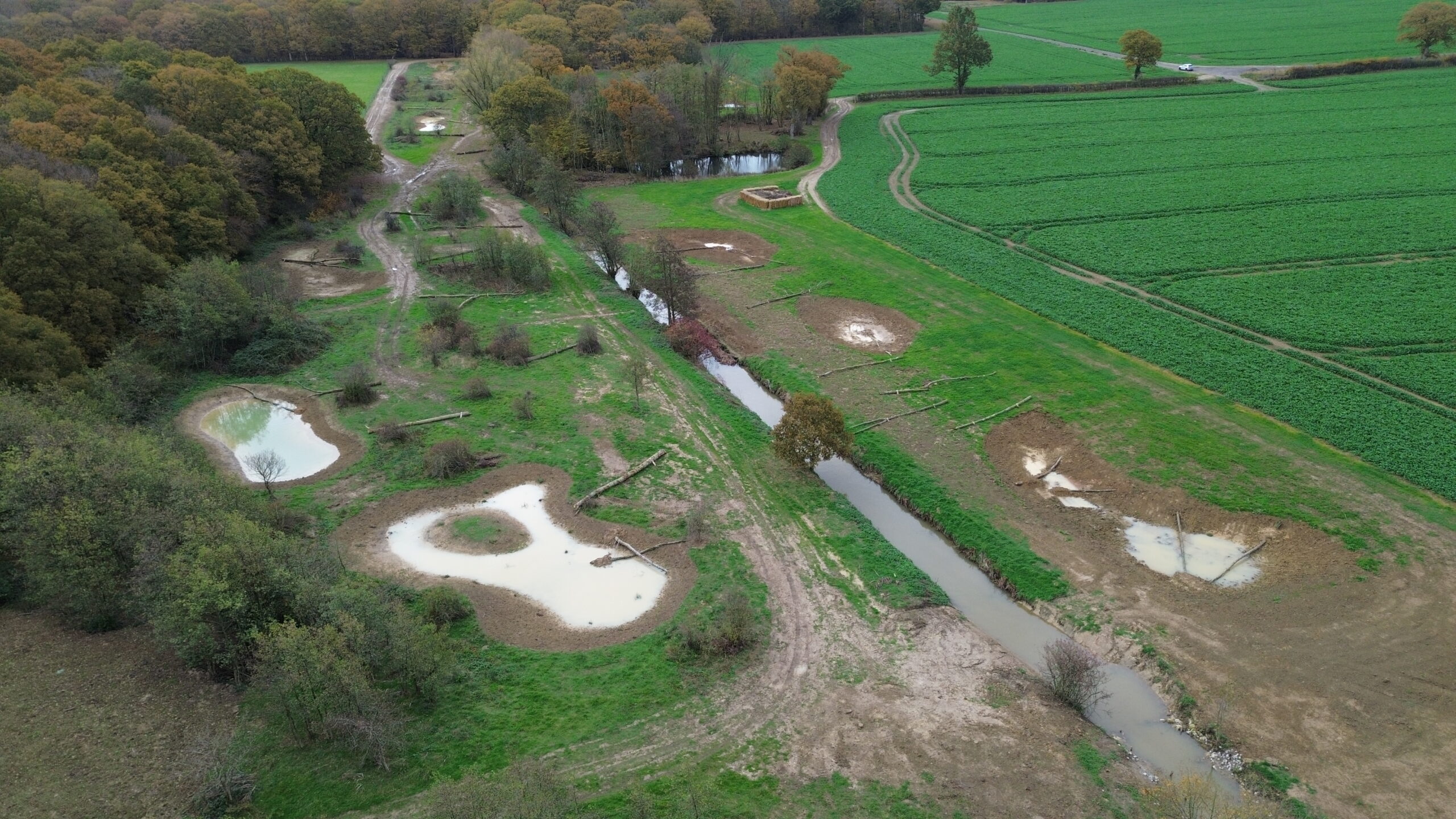
An aerial view of scrapes within the Upper Beult catchment © South East Rivers Trust
Our approach: working with nature
We use nature-based solutions—techniques that restore natural processes to manage water, improve habitats and reduce pollution.
These solutions are practical, proven, and designed to benefit both the environment and local livelihoods.
Key interventions include:
- Leaky woody dams
Slowing the flow of water to reduce flood risk and increase water storage upstream - Riparian buffer strips
Vegetated margins alongside rivers that filter pollutants before they enter the water - Wetland, woodland and grassland restoration
Reconnecting rivers to their floodplains, storing water naturally and creating rich habitats
Together, these measures help the river hold, clean and release water more naturally—making the whole catchment more resilient.
Building on years of research
Our work on the Beult builds on PROWATER, an international programme that explored how restoring natural landscapes can make water resources more resilient.
Working with partners in the UK, Belgium and the Netherlands, we investigated how healthy soils, wetlands, woodlands and grasslands can help store, clean and slowly release water.
The River Beult was one of our demonstration catchments. The evidence and learning from PROWATER helped us identify where nature-based solutions could make the greatest difference and laid the foundations for our later Upper Beult resilience work.
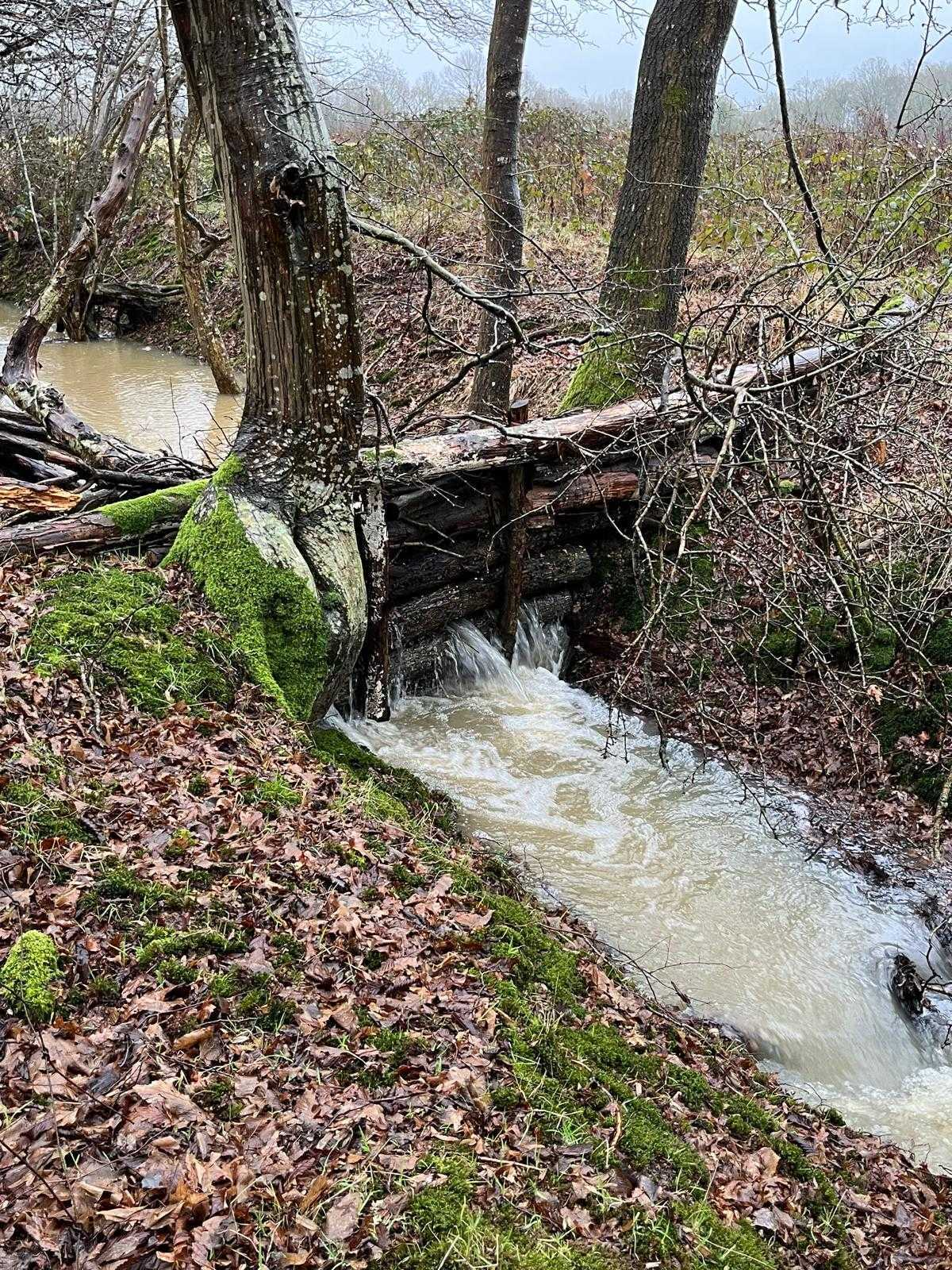
A leaky woody dam © South East Rivers Trust
What we’re doing on the ground
Upper Beult Catchment Resilience Pilots
Across 16 hectares of land, we’ve worked with local landowners and the Upper Beult Farmer Cluster to restore habitats that hold and filter water.
- Floodplains reconnected and wetlands created
- New wet woodland and marsh habitats established
- Over 300,000 cubic metres of water stored annually
This work is helping the river better withstand both drought and flooding, while improving biodiversity and soil health.
Sherway Natural Flood Management
In the Sherway tributary, we are designing and delivering natural flood management measures to slow and store water before it reaches vulnerable areas like Headcorn.
Working with partners including the Upper Medway Internal Drainage Board, Natural England and Kent Wildlife Trust, we are:
- Identifying opportunities for nature-based interventions
- Supporting landowners to host and maintain features
- Expanding impact across the wider catchment
This work is funded by Maidstone Borough Council, with further opportunities being explored.
Holistic Water for Horticulture
Across the Medway catchment, including the Beult, we’re working with the horticultural sector to build long-term water resilience.
This includes:
- Supporting water-efficient practices
- Exploring natural water storage solutions
- Helping businesses adapt to increasing water pressures
By working together, we’re supporting both thriving rivers and resilient local food production.
Find out more about this project here.
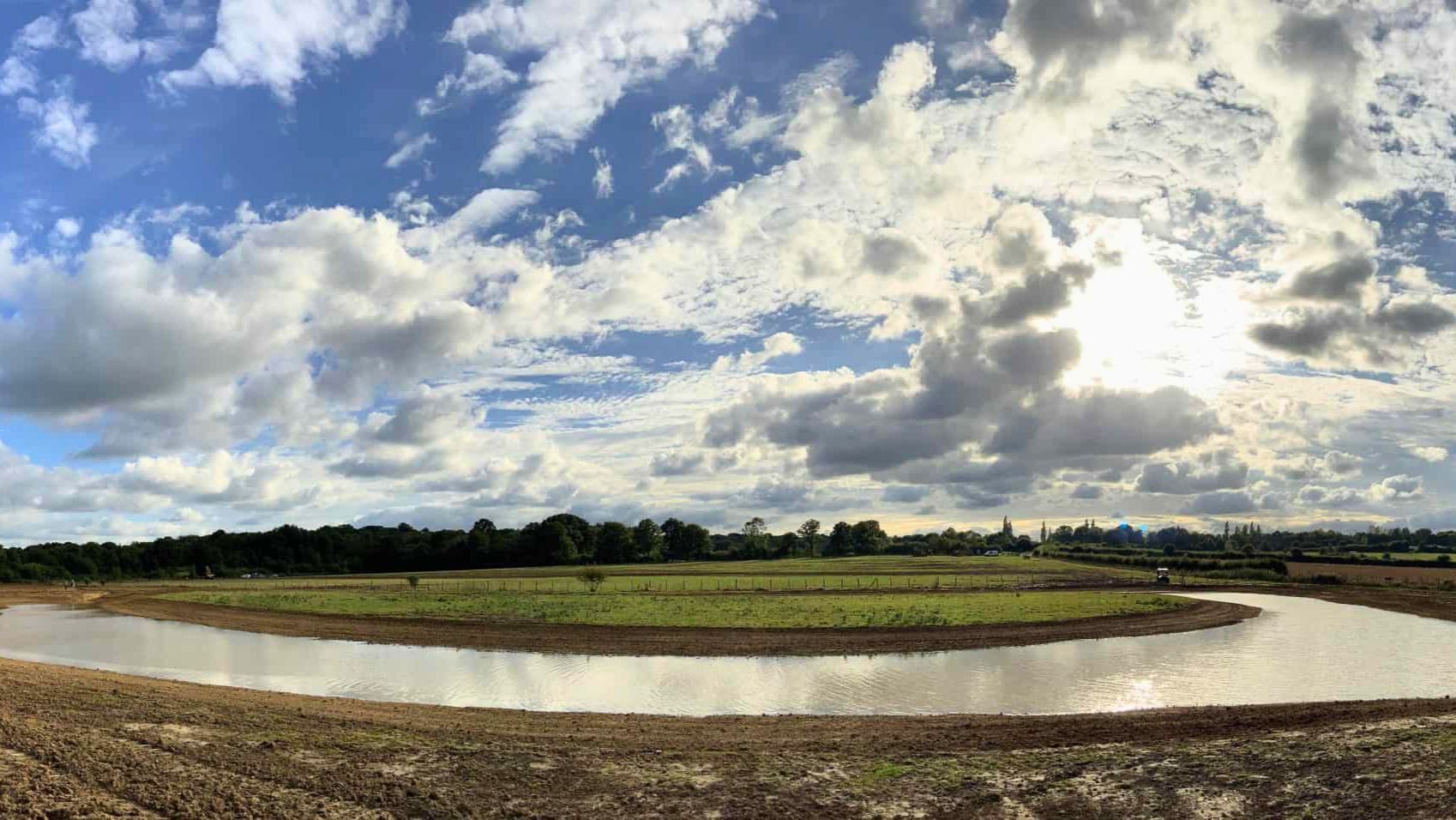
Flood plain restoration in the Medway catchment © South East Rivers Trust
Project impact
Our work in the Beult catchment is already delivering measurable benefits:
- Increased water storage across the landscape
- Reduced flood risk downstream
- Improved water quality entering the river
- New habitats for wildlife, including priority species
- Stronger collaboration with farmers and land managers
This is long-term, landscape-scale change—driven by partnership and evidence.
What’s next
We’re continuing to expand this work across the catchment—developing new projects, securing funding and working with more landowners to scale up impact.
By restoring natural processes across the Beult, we can create a river system that is cleaner, healthier and more resilient to future challenges.
Get involved
Sign up to our newsletter to receive the latest project updates and volunteering opportunities.