A new wetland capable of storing up to 600,000 litres of water is among the latest natural flood management measures delivered by the South East Rivers Trust in the Upper Mole catchment.
The South East Rivers Trust has completed the latest phase of work on the Gatwick Airport Natural Flood Management project, helping the local landscape become more resilient to both heavy rainfall and prolonged dry weather.
The project is funded by London Gatwick as part of its second Decade of Change sustainability programme and is being delivered by the South East Rivers Trust across the Upper Mole catchment.
As recent hot, dry weather has shown, it is increasingly important to retain more water within the landscape, rather than allowing it to flow rapidly downstream. Natural flood management helps do this by using nature-based solutions to slow, store and filter water.
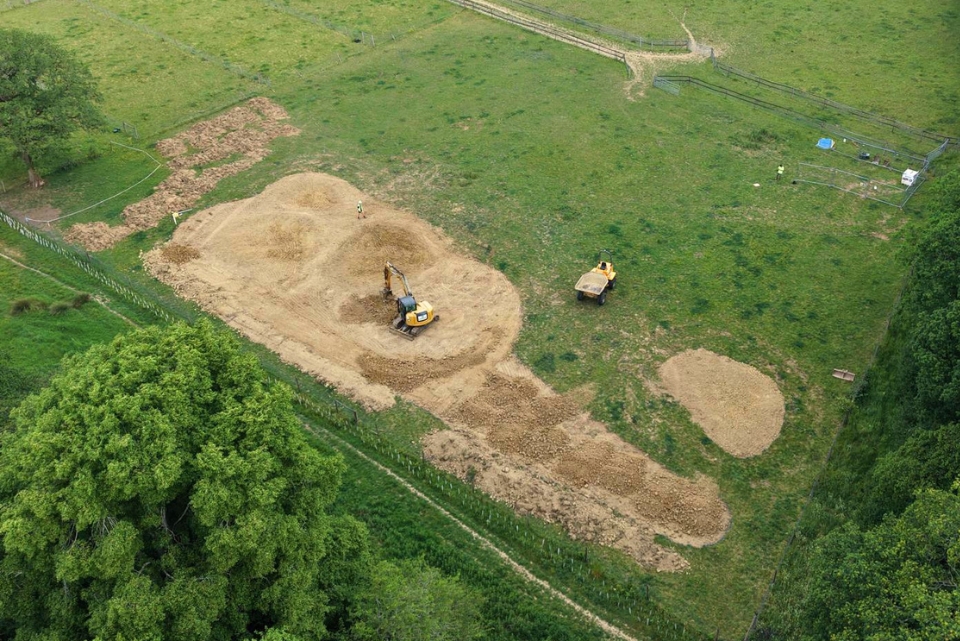
Aerial view of the wetland construction at Venters Farm © South East Rivers Trust
Creating space for water in the Upper Mole
Across two sites, the project has created a new wetland that can store up to 600m³ of water during heavy rainfall. This is equivalent to around 600,000 litres.
The wetland will collect rainfall and surface water before releasing it more gradually downstream. This can help reduce pressure on the river system during wet weather, while also holding water in the landscape for longer during dry periods.
The project has also reconnected 100 metres of river to its floodplain. This gives water more space to spread out and be held temporarily on the floodplain, before slowly filtering downstream.
Together, these measures support a more resilient river landscape by helping to reduce flood risk, improve water quality and create better habitats for wildlife.
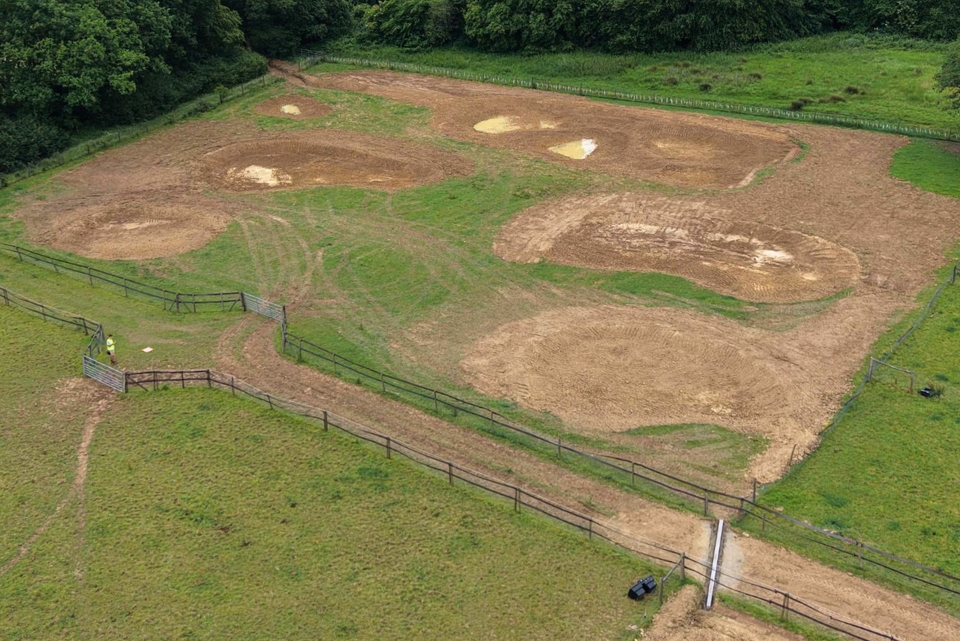
Aerial view of completed wetland at Baldhorns Farm © South East Rivers Trust
What has been delivered so far
Between July 2025 and June 2026, the project has delivered a range of natural flood management measures across the Upper Mole catchment, including:
- Creating a new wetland capable of storing up to 600m³ of water
- Reconnecting 100 metres of river to its floodplain
- Installing more than 50 leaky barriers to slow the flow of water
- Planting a 100-metre hedgerow with 400 native trees
- Engaging two additional landowners to support future catchment-scale delivery
- Continuing to monitor water levels, rainfall and turbidity to understand how water moves through the catchment
Leaky barriers are made from natural materials such as branches and logs. They are carefully installed to allow normal river flows to pass through, while slowing and temporarily holding back water during heavier rainfall.
This helps reduce the speed at which water moves downstream and gives the landscape more time to absorb and store it.
Building resilience to a changing climate
The Upper Mole is a fast-responding catchment, which means water can move quickly through the river system during heavy rainfall. This can increase pressure on communities, habitats and water quality downstream.
Natural flood management works with the landscape to help address these challenges closer to their source.
By creating wetlands, reconnecting rivers with their floodplains and installing leaky barriers, the project is helping to make more space for water across the catchment.
These measures are designed to support the landscape during wetter periods, while also helping rivers, wildlife and surrounding habitats cope better during dry weather.
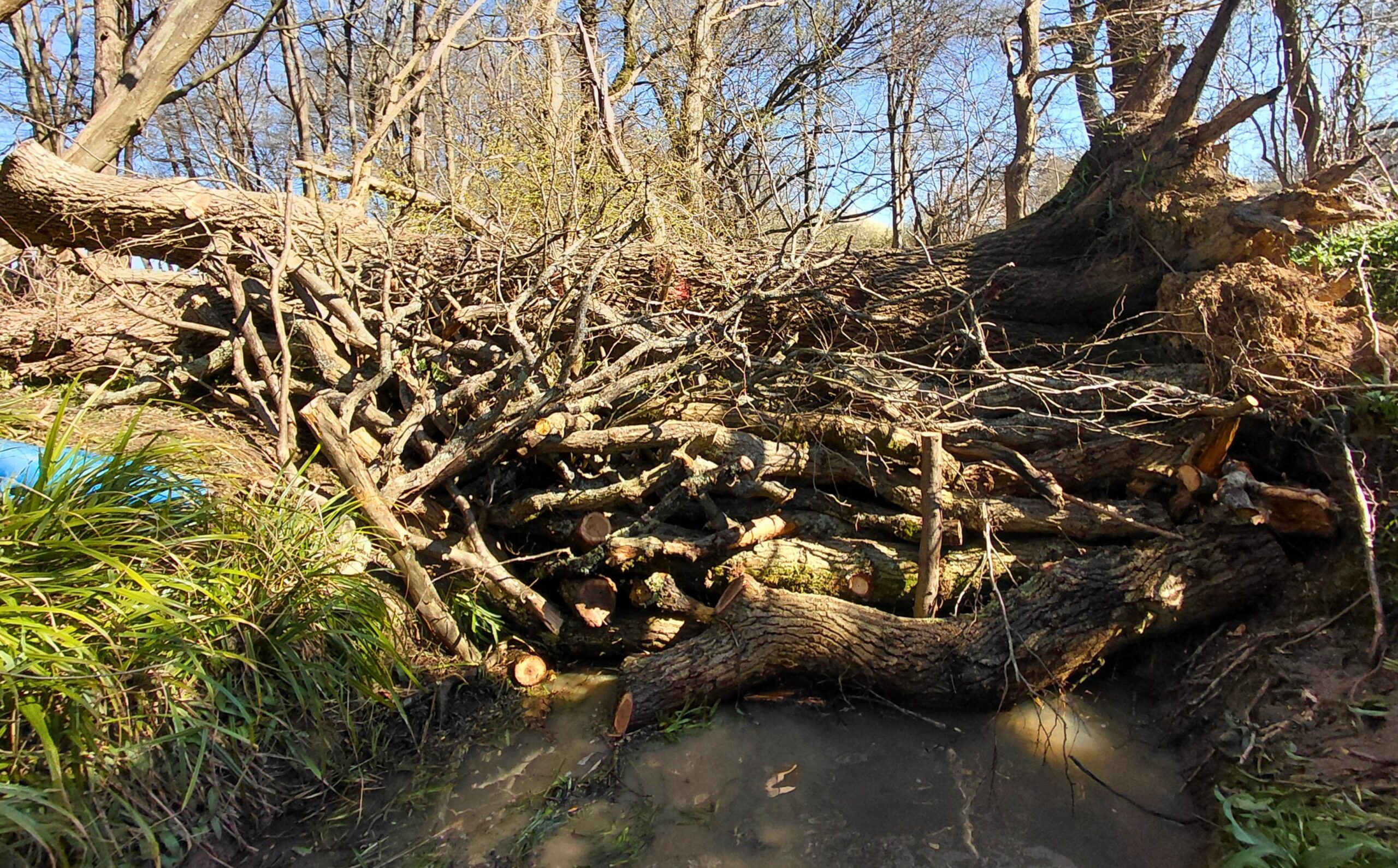
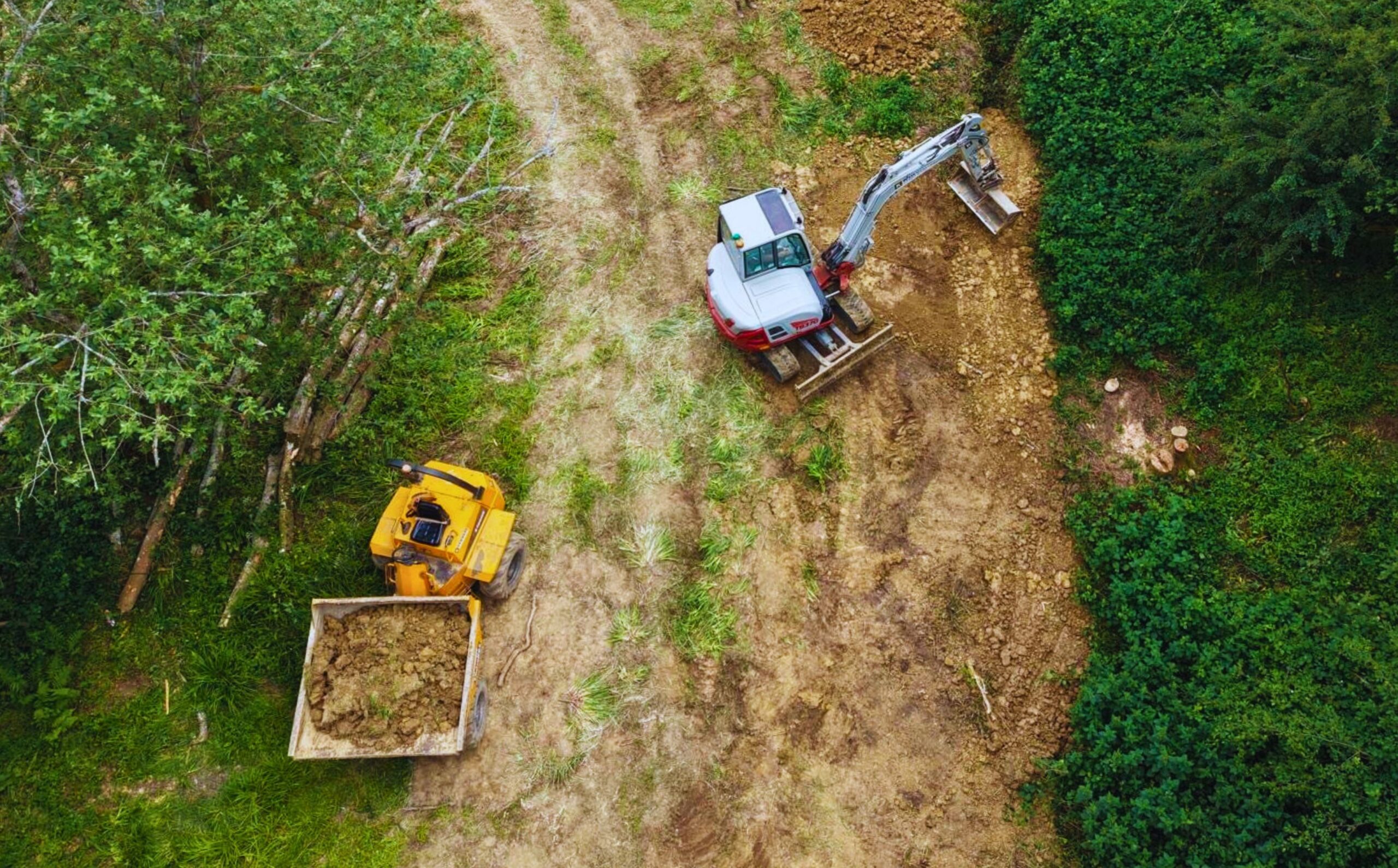
A leaky woody dam in action on the Upper Mole © South East Rivers Trust
What happens next
Funding has been secured for the next phase of delivery, which will run from July 2026 to June 2027.
During Year 3, the project will focus on:
- Reinstating an old offline pond to help store water and support biodiversity
- Delivering more leaky barriers with newly engaged landowners
- Designing another new wetland to improve water quality and availability
- Continuing the monitoring programme to assess the benefits of completed restoration works
- Organising local engagement days to raise awareness of the Upper Mole and natural flood management
- Expanding the project into another of the six waterbodies within the Upper Mole catchment
The long-term aim is to expand this work across the Upper Mole and demonstrate how nature-based solutions can help restore other urban river headwaters across the South East.
Discover the Gatwick Airport Natural Flood Management project
Find out how we’re working across the Upper Mole catchment to slow, store and filter water, improve habitats and help build a more resilient landscape for people and wildlife.