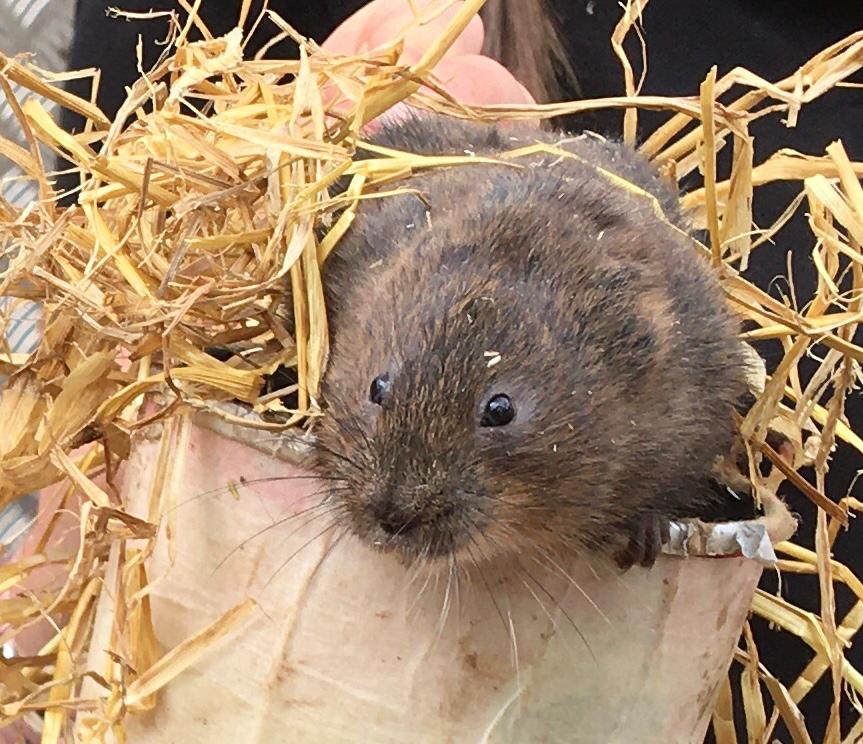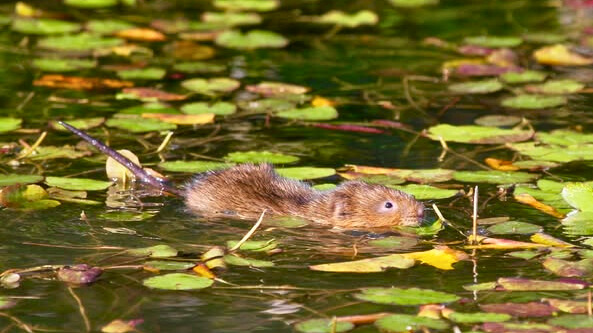
One year after water voles were returned to the Upper Hogsmill River, new camera-trap footage and field signs show that they are settling into their restored home and exploring the river.
Around 50 water voles were released into Chamber Mead wetlands and the adjacent river in Ewell on 30 July 2025.
One year on, monitoring is providing encouraging evidence that they are thriving. Camera traps have captured a continuous flow of images showing the animals behaving naturally, while recent surveys have found signs of water voles both upstream and downstream of the release site.
These discoveries suggest that the animals are moving along the river and making the Hogsmill their home.
The South East Rivers Trust is an environmental charity working to restore rivers for wildlife and communities. The water voles’ return followed years of practical river restoration, scientific monitoring and partnership working to create the healthy, connected habitat they need.

Following the clues left by water voles
Water voles can be difficult to spot, but they leave distinctive clues behind.
Citizen Zoo is monitoring this stretch of the Hogsmill using four latrine rafts, two camera traps and a clay tracking raft. These are supported by regular surveys of the river and its banks.
Recent surveys have identified:
- burrows in the riverbanks
- feeding remains
- vegetation chewed at a characteristic 45-degree angle
- distinctive “tic-tac-shaped” droppings at water vole latrines
Together with the camera-trap images, these signs are building an encouraging picture of how the population is settling into the river. Finding evidence both upstream and downstream is particularly positive, as it suggests that the water voles are beginning to explore beyond the original release area.
A welcome return for local communities
Water voles had been absent from Surrey for more than 20 years before their reintroduction to the Upper Hogsmill.
Their return has captured the imagination of people living close to the river, even though the elusive animals are not always easy to see.
It’s wonderful to see how excited local people are to have water voles living on their doorstep.Laura Nee, Catchment Officer at the South East Rivers Trust
Camera-trap footage and recent surveys are giving us an encouraging picture of how they are settling in, with signs found both upstream and downstream.
A year after their reintroduction, it’s incredibly exciting to see evidence that they are making the Hogsmill their home.
Restoring the river before returning the species
Water voles were once widespread along the Hogsmill but disappeared following decades of habitat loss and pressure from invasive American mink.
Bringing them back required much more than releasing animals into the river. Suitable habitat had to be restored first, providing the food, shelter, riverbanks and connected spaces water voles need to survive and spread.
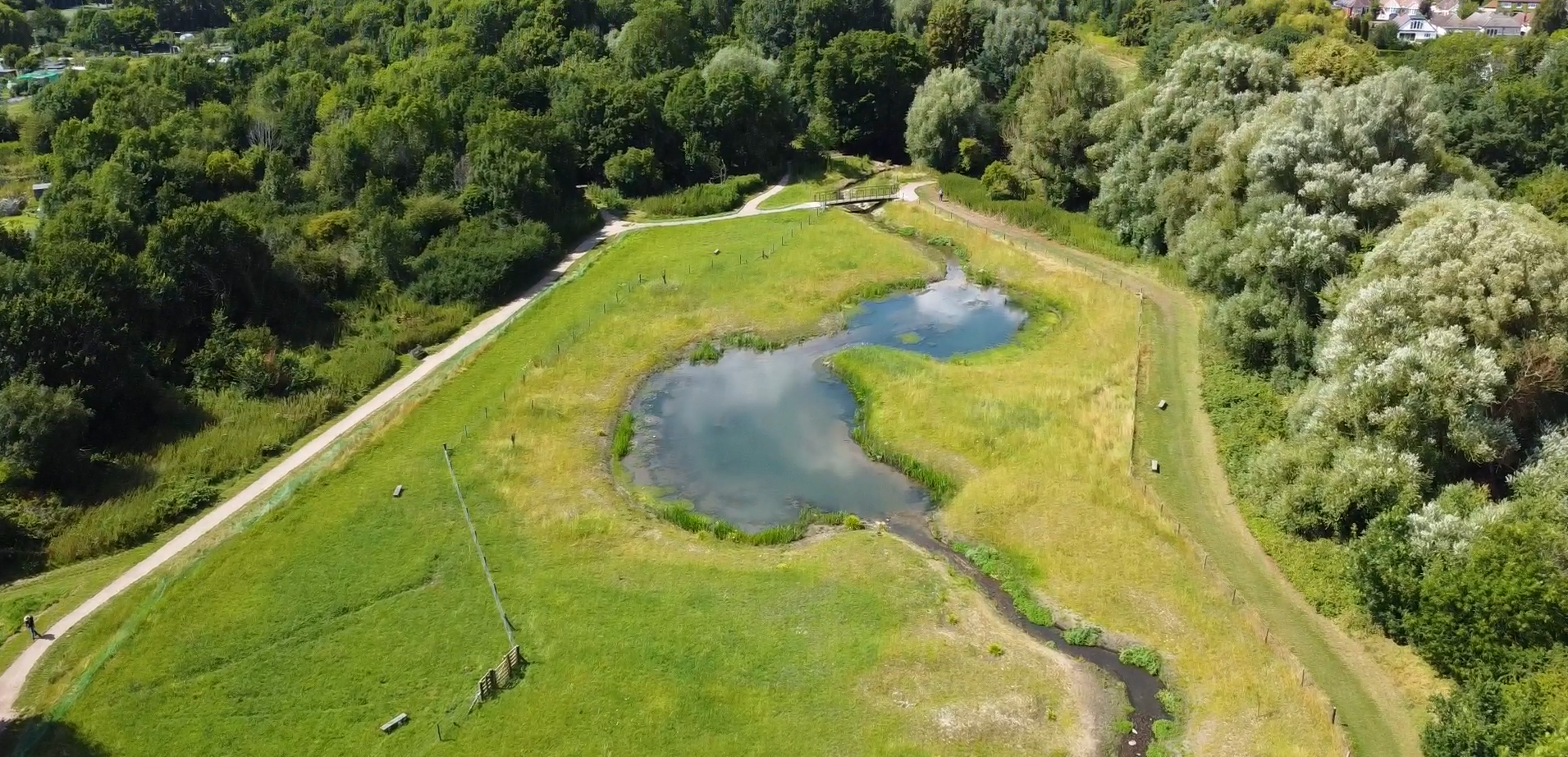
An aerial view of the Chamber Mead wetlands © DEFRA
Creating the wetlands
Chamber Mead wetlands were created by the South East Rivers Trust in partnership with Epsom & Ewell Borough Council. The wetlands provide dense vegetation, suitable banks and connections to the wider Hogsmill, helping wildlife move through the river corridor.
The July 2025 release was delivered by South East Rivers Trust and conservation charity Citizen Zoo. The water voles were bred by Wildwood Trust, which specialises in conservation breeding and the recovery of native species.
It complemented an earlier reintroduction led by Citizen Zoo further downstream, where 101 water voles were released in 2022. Establishing populations in different parts of the river helps strengthen genetic diversity and supports the species’ longer-term recovery.
Working together for nature recovery
The reintroduction formed part of the WET Hogsmill project, which ran from September 2023 to 2025 and created or improved habitat for water voles, European eels and native trout.
South East Rivers Trust delivered the project in partnership with Citizen Zoo, supported through Natural England’s Species Recovery Programme.
The water vole reintroduction was also supported by Wildwood Trust, Epsom & Ewell Borough Council and Thames Water.
Monitoring will continue to help the project partners understand how the population is developing and guide future habitat conservation along the river.
A year after their return, every camera-trap image, burrow and feeding sign tells an encouraging story: water voles are once again becoming part of life along the Hogsmill.
As an environmental charity, we rely on support to restore rivers and help threatened wildlife recover. Learn how you can support our work.
Follow the water voles' progress
Sign up for news from the South East Rivers Trust and discover how we are helping rivers thrive again for wildlife and communities across the South East.